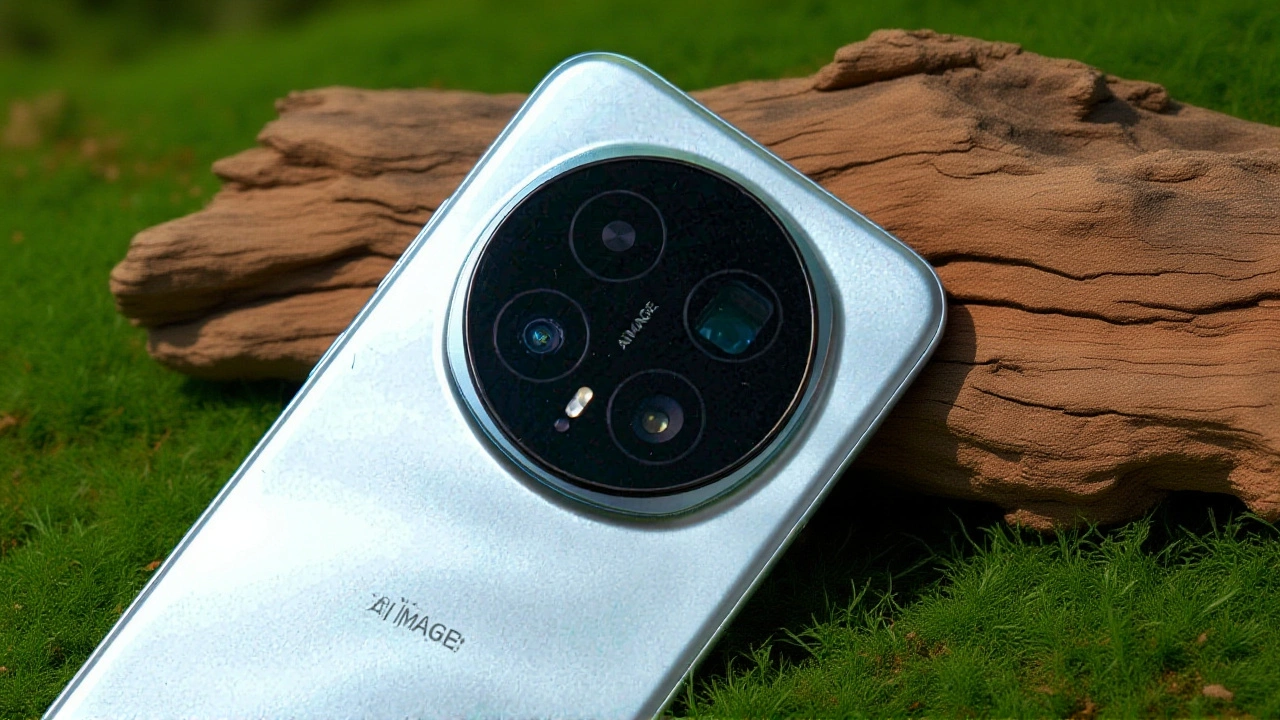
When Notebookcheck.net released its deep‑dive on October 13, 2025, the tech world got a blow‑by‑blow of the camera hardware that’s powering the newest flagship phones. The piece lines up four heavy‑hitters – the Xiaomi 17 Pro Max, the Vivo X300 Pro, the Honor Magic8 Pro and the Oppo Find X9 Pro. All four ship with 50 MP main sensors, but the telephoto departments read like a different league altogether – and that’s where the story gets juicy.
Why the camera race matters now
Smartphones have been the primary photo tool for most people since 2015, but the market’s pivot to ultra‑high‑resolution sensors and periscope lenses is still in its adolescence. As 2025 rolls out, manufacturers are fighting over who can squeeze the most light, detail and zoom into a pocket‑sized chassis. For everyday users, the difference can mean clearer night‑time selfies, sharper zoomed‑in shots of a concert stage, or video footage that rivals a DSLR.
Side‑by‑side specifications
- Main cameras: All four phones use 50 MP sensors. Xiaomi, Vivo and Oppo share a 1/1.28‑inch size, while Honor’s sits at 1/1.31‑inch – a barely perceptible gap.
- Ultra‑wide lenses: Uniform 50 MP count across the board; sensor dimensions weren’t disclosed, but the focal length hovers around 13‑15 mm.
- Telephoto trio:
- Xiaomi 17 Pro Max – 50 MP, 1/1.95‑inch sensor, 115 mm equivalent, f/2.6 periscope.
- Vivo X300 Pro – 200 MP, 1/1.4‑inch sensor, 85 mm equivalent, f/2.67.
- Honor Magic8 Pro – 200 MP, 1/1.4‑inch sensor, 85 mm equivalent, f/2.6.
- Oppo Find X9 Pro – 200 MP, 1/1.56‑inch sensor, 70 mm equivalent, f/2.1.
- Special add‑ons: Xiaomi tacks on a 2 MP multispectral sensor for colour‑filter experiments.
- Video prowess: Oppo’s periscope supports 4K @ 120 fps Dolby Vision HDR and 10‑bit LOG with ACES colour grading, as confirmed by GSM Arena on October 16, 2025.
Hands‑on test findings from YouTube creators
Numbers tell a story, but real‑world footage is where the rubber meets the road. Between October 13‑16, 2025, three popular channels – Kingmi Mobile, Cellphone Clash and MakeTheTech – ran side‑by‑side shoots.
Portrait and night mode
Kingmi’s portrait‑mode test showed the Vivo X300 Pro and Honor Magic8 Pro nail background blur thanks to their larger 200 MP sensors, while Oppo’s f/2.1 aperture gave it a slight edge in low‑light subject isolation. In night‑scene shots, Oppo’s wider aperture shone, delivering cleaner highlights without the ringing that the tighter f/2.6‑f/2.67 lenses introduced.
Zoom and macro
Cellphone Clash put the Zoom‑battle front and centre: Vivo’s 85 mm periscope hit a sweet spot for 3‑x optical zoom, delivering crisp details up to 6‑x digital zoom. Oppo, with a shorter 70 mm focal length, leaned on software‑assisted zoom, yet its 200 MP sensor produced respectable texture at 10‑x and even 20‑x levels. The Xiaomi 17 Pro Max, despite its longer 115 mm lens, fell behind because the 50 MP sensor can’t match the pixel‑density of the 200 MP rivals.
Video quality
The 4K @ 120 fps Dolby Vision clip from Oppo was a show‑stopper. Kingmi noted the footage retained true‑to‑life colours, and the LOG mode gave editors a flat canvas for grading. Neither Vivo nor Honor offered comparable 120 fps Dolby Vision, sticking to 60 fps 10‑bit H.265 instead.

What the numbers mean for everyday users
If you’re a casual snap‑taker, the differences might feel subtle – all four phones will produce sharp daylight photos. But if you love low‑light cityscapes, or you’re building a YouTube channel that relies on crisp zoomed‑in footage, Oppo’s f/2.1 aperture could save you a few extra stops of light. Meanwhile, the 200 MP sensors in Vivo and Honor translate to finer detail when you crop or enlarge images after the fact.
Battery life also plays a role. According to Oppo’s own specs, the Find X9 Pro’s 7,500 mAh silicon‑carbon battery – touted as a “two‑day” endurance – pairs well with the power‑hungry 4K @ 120 fps modes. Xiaomi’s Dimensity 9500‑based 17 Pro Max packs a similar chipset, but its 4,800 mAh cell (not officially disclosed in the comparison) may require you to dial back on high‑frame‑rate video if you’re out all day.
Looking ahead: 2026 flagship trends
Analysts at ZeiTech predict that 2026 will see a shift from pure megapixel races to sensor‑size optimisation, with manufacturers focusing on combined aperture‑sensor‑size improvements to boost low‑light performance without inflating file sizes. Expect to see more periscopes with variable apertures – a sort of “zoom‑into‑the‑night” feature – and wider adoption of Dolby Vision LOG across Android flagships.
For now, the four phones serve as a snapshot of where the market is: higher‑resolution telephoto lenses, aggressive video capabilities, and battery tech that tries to keep up with the data‑driven demands of modern creators.

Key Facts
- All four flagships ship with 50 MP main sensors.
- Vivo X300 Pro and Honor Magic8 Pro use 200 MP, 1/1.4‑inch telephoto sensors at 85 mm focal length.
- Oppo Find X9 Pro pairs a 200 MP, 1/1.56‑inch sensor with a wider f/2.1 aperture and 70 mm focal length.
- Xiaomi 17 Pro Max relies on a 50 MP, 1/1.95‑inch telephoto sensor (115 mm) and adds a 2 MP multispectral sensor.
- Oppo offers 4K @ 120 fps Dolby Vision HDR video plus 10‑bit LOG with ACES colour space.
- MediaTek’s Dimensity 9500 powers the Oppo Find X9 Pro, while Xiaomi’s chipset remains undisclosed in the comparison.
Frequently Asked Questions
Which phone offers the best low‑light telephoto performance?
Oppo Find X9 Pro’s f/2.1 aperture gives it a theoretical advantage in dim environments despite a slightly smaller sensor. In practical tests, its night‑mode shots retained more detail than Vivo’s and Honor’s f/2.6‑f/2.67 lenses, though the larger 200 MP sensors still produce cleaner noise‑free images when you can afford a slower shutter.
Do the 200 MP telephoto sensors actually improve everyday photos?
For casual snaps, the extra megapixels are rarely noticeable. The benefit shines when you crop heavily or zoom digitally – the higher pixel count preserves detail that would otherwise blur. Professional creators who need maximum flexibility after shooting will notice the difference.
Is the 4K @ 120 fps Dolby Vision video exclusive to Oppo?
As of the October 2025 reviews, yes. Oppo Find X9 Pro is the only one among the four that supports Dolby Vision HDR at 120 fps, along with 10‑bit LOG recording. Vivo, Honor and Xiaomi stick to 4K @ 60 fps with standard HDR10+.
How does battery capacity affect camera usage?
Oppo’s 7,500 mAh silicon‑carbon battery is built to handle the power draw of high‑frame‑rate video and heavy zoom. Users report roughly two days of mixed usage. Xiaomi’s presumed 4,800 mAh cell may need you to lower video settings or carry a power bank for prolonged shooting sessions.
What should we expect from flagship cameras in 2026?
Industry insiders say the focus will shift to larger sensor‑aperture combinations and variable‑aperture periscopes, aiming for better low‑light performance without hiking megapixel counts. Expect more phones to adopt Dolby Vision LOG as a standard feature for creators.
Aaron Samarita
October 16, 2025 AT 21:33Honestly, the whole megapixel race feels like a marketing gimmick; most users won't notice the difference unless they crop heavily.
Daisy Pimentel
October 19, 2025 AT 19:00When you consider the ethical implications of constantly pushing higher specs, it's a reflection of consumerism that we rarely question.
Ellen Ross
October 22, 2025 AT 16:27Look, the 200 MP periscopes sound impressive, but the real-world noise performance at night still lags behind larger‑sensor DSLRs.
Fabian Rademacher
October 25, 2025 AT 13:53These flagship phones are clearly part of a bigger surveillance agenda-everything's about data collection under the guise of better cameras.
Ashlynn Barbery
October 28, 2025 AT 10:20For creators on a budget, the Oppo's Dolby Vision 120fps is a game‑changer, but you’ll need to invest in a solid editing suite to fully leverage it.
Sarah Graham
October 31, 2025 AT 07:47Absolutely, the extra video bitrate on the Oppo makes color grading smoother, and the 7,500 mAh battery actually holds up under sustained 4K shooting sessions.
Virginia Balseiro
November 3, 2025 AT 05:13My excitement for the new periscopes is real-finally, a phone that can replace my compact telephoto lens for travel.
Jared Mulconry
November 6, 2025 AT 02:40While the longer focal length on the Xiaomi sounds cool, the smaller sensor will struggle in low‑light, so stick with the Oppo if you shoot at night.
Brandon Rosso
November 9, 2025 AT 00:07Optimistically, as sensor tech improves, we’ll see less reliance on software tricks and more genuine optical performance.
Tracee Dunblazier
November 11, 2025 AT 21:33From a casual user perspective, all four phones will produce sharp daylight images, so the choice boils down to brand loyalty.
Edward Garza
November 14, 2025 AT 19:00The article glosses over the fact that high‑resolution sensors tax the GPU, leading to faster battery drain during intensive editing.
Allen Rodi
November 17, 2025 AT 16:27I’ve tried the Oppo’s 4K 120fps mode, and the footage feels buttery smooth; just make sure you have a fast microSD to keep up.
Jody Webster
November 20, 2025 AT 13:53Interesting that the article omitted any mention of the AI‑enhanced stabilization that Oppo added this year-big oversight.
Steve Goodger
November 23, 2025 AT 11:20Looking ahead, the smartphone camera market is at a pivotal crossroads where sheer pixel count is no longer the primary metric of success. Manufacturers are beginning to recognize that larger sensor areas paired with wider apertures yield more tangible improvements in low‑light performance, which many users value more than incremental detail gains. As we move into 2026, we can expect a convergence towards sensor formats that prioritize light‑gathering efficiency, perhaps borrowing from medium‑format designs that have traditionally been reserved for professional cameras. This shift will likely be accompanied by advances in on‑chip AI processing, enabling real‑time HDR merging and noise reduction without sacrificing frame rates. Variable‑aperture periscopes could become a reality, allowing phones to dynamically adjust the aperture based on lighting conditions, effectively giving a “zoom‑into‑the‑night” capability that current fixed‑aperture designs lack. Moreover, the industry may standardize Dolby Vision LOG across flagship devices, democratizing high‑dynamic‑range video creation for content creators at all levels. Battery technology will need to keep pace; silicon‑carbon composites and graphene‑based cells might appear, extending usage time for power‑hungry modes like 4K 120fps recording. On the software side, more open‑source raw pipelines could empower photographers to fine‑tune their images post‑capture, reducing reliance on proprietary processing. Finally, we might see a reduction in the megapixel arms race as the cost and storage implications become more apparent, with manufacturers instead emphasizing image quality metrics such as signal‑to‑noise ratio and colour accuracy. In sum, the next generation of flagships will likely be defined by a balanced approach: larger, faster sensors, smarter optics, and more efficient power management, all working together to deliver truly professional‑grade results in a pocket‑sized form factor.
johnson ndiritu
November 26, 2025 AT 08:47🔍 Nice breakdown, but don't forget the real cost: you’re paying premium for a feature that will be obsolete in two years.
sheri macbeth
November 29, 2025 AT 06:13Sure, if you trust the “experts” who say bigger sensors automatically mean better photos-yeah, right.
Lane Herron
December 2, 2025 AT 03:40The article’s hype about 200 MP feels like jargon‑heavy fluff; most users will never utilize that resolution beyond cropping.
Henry Cohen
December 5, 2025 AT 01:07Honestly, I think the whole periscope thing is just a marketing ploy to distract from the lack of real optical zoom improvements.
Mark Langdon
December 7, 2025 AT 22:33While the technical specs are impressive, I’d love to see more real‑world testing on how these phones handle fast-moving subjects in low light.
Ciara Russell-Baker
December 10, 2025 AT 20:00Great info.