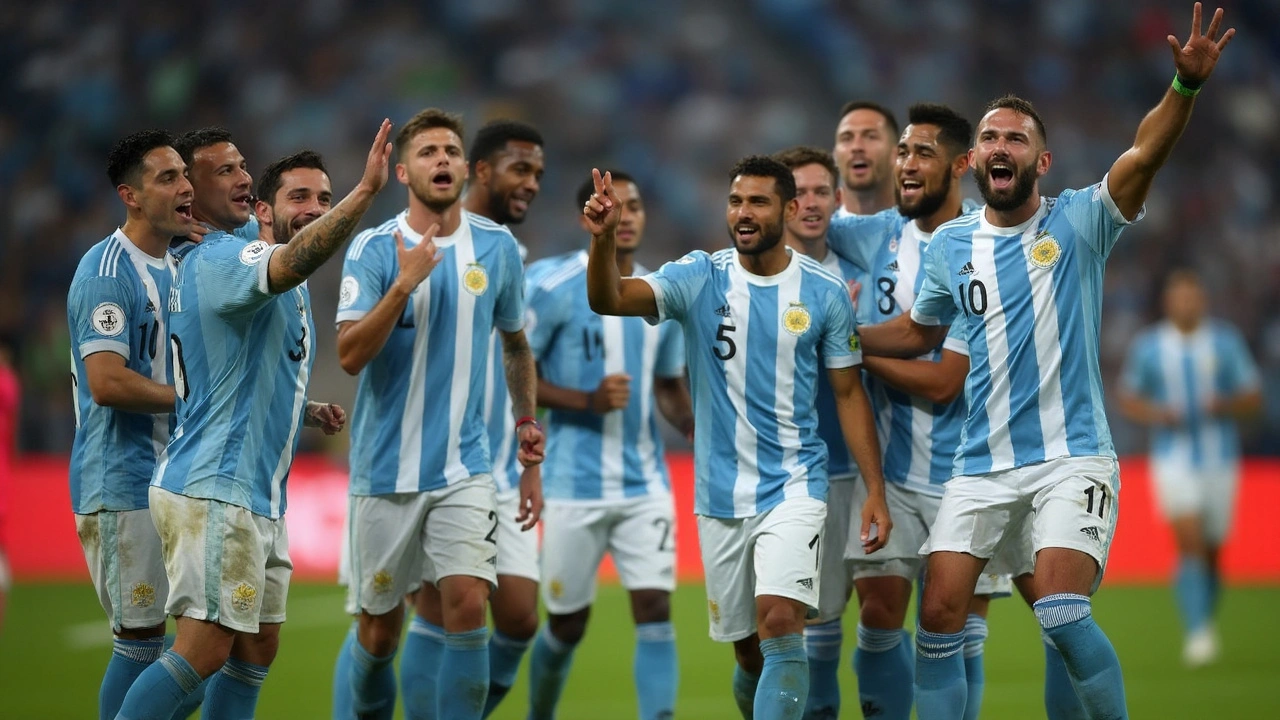
Seven Early Entrants in the Race for the World’s Biggest Football Event
It’s official—seven teams are already packing their bags for the 2026 FIFA World Cup. While three of these teams—Canada, Mexico, and the United States—secured their spots without breaking a sweat as tournament hosts, the rest battled their way through tough qualifying rounds. Japan became the first Asian team to clinch a place for 2026, sweeping through their AFC group with not much resistance and securing the ticket in March 2025. The Japanese squad, riding high on their 2022 performance, barely dropped points, leaving their rivals scrambling for second place.
Over in Oceania, football fans have more to cheer about. New Zealand finally booked a return to the World Cup stage—their first since 2010—thanks to an expanded tournament allowing the Oceania region more opportunity. The Kiwis waltzed through their qualifiers, capitalizing on the region’s extra slot, which was a real game-changer for nations often overshadowed by bigger football continents. Iran joined the party too, taking advantage of a solid qualifying run and wrapping up their qualification by March 2025 without leaving any questions about their place in the tournament.
The Expanded Format and What It Means for Everyone
The 2026 World Cup is already making waves long before the first ball is kicked. For the first time, 48 teams will compete, up from the usual 32. This isn’t just about bigger numbers for the sake of spectacle. It means regions like Oceania—often a footnote when talking about football’s biggest event—finally get a real seat at the table. This translates to 16 more teams with a chance to write their World Cup story.
In North America, the CONCACAF qualification process is in full swing. Thirty teams are split across six groups for round two, scrapping for a place in the all-deciding third round. Here, every game counts; slip-ups are costly because only the top two teams in each group survive. For fans, it’s high-stakes drama with plenty of twists—regional rivalries, emerging underdogs, and surprise upsets. As for the big South American showdown, the CONMEBOL qualifiers have been fierce since September 2023, showcasing football at some of its highest intensity and technical level.
Europe and Africa are not far behind. The UEFA qualifiers, expected to kick off in March 2025, are always a pressure cooker, packed with heavyweight nations and tricky dark horses. Meanwhile, Africa’s CAF qualifiers return in November 2023, and Oceania sees its own qualifying rounds starting September 2024. All these timelines create a domino effect, pushing the tempo of international football and keeping fans guessing who will make it to the final list.
One of the biggest plot twists will be the inter-confederation playoffs. Once all qualifiers wrap up, runners-up from the CONCACAF third round and other regions will fight tooth and nail for the final places. This sudden-death scenario is where dreams are made—and broken.
With the early birds already qualified and so many matches still to play across every continent, one thing’s clear: the road to the 2026 FIFA World Cup is more open, wild, and unpredictable than ever before.
randy mcgrath
April 21, 2025 AT 22:20It's fascinating how the tournament's growth mirrors the way societies evolve, each new slot like a step toward greater inclusion while still preserving the competitive spirit that defines the beautiful game.
Frankie Mobley
April 22, 2025 AT 15:00The early qualifiers show that host nations benefit from automatic spots, while teams like Japan and New Zealand prove that consistent performance can secure a place well ahead of the final deadline.
ashli john
April 23, 2025 AT 07:40Great to see the mix of seasoned teams and newcomers joining the race it really boosts the global excitement and gives younger squads a chance to shine.
Kim Chase
April 24, 2025 AT 00:20i think the new 48‑team format is a win for the underdogs, especially for oceania where the kiwis finally get the brek we all cheered for.
David Werner
April 24, 2025 AT 17:00What most folks ignore is that the extra slots are a smokescreen, a calculated move by the elite to funnel money into markets already saturated, while true footballing nations get sidelined in a grand spectacle of profit.
Paul KEIL
April 25, 2025 AT 09:40From a strategic perspective the expanded allocation recalibrates the competitive equilibrium, enhancing marginal utility for peripheral confederations while preserving core revenue streams.
Horace Wormely
April 26, 2025 AT 02:20Actually the sentence should read “enhancing the marginal utility” and “preserving core revenue streams” – the article “the” before “marginal” is missing, and a comma after “equilibrium” would improve clarity.
christine mae cotejo
April 26, 2025 AT 19:00The expansion to 48 teams marks a pivotal moment in the history of international football, offering a broader canvas for nations to showcase their talent. It creates unprecedented opportunities for countries that have traditionally struggled to break through the qualification barrier. Young players now have a realistic pathway to experience the tournament atmosphere at an earlier stage in their careers. Fans across the globe will benefit from a richer tapestry of cultural narratives and playing styles. The increased number of matches will also provide more data for analysts to dissect tactical evolutions. Television broadcasters are poised to capitalize on higher viewership numbers, driving revenue streams that can be reinvested into grassroots programs. Host nations will face logistical challenges, yet the economic boost to local economies is expected to be substantial. The competitive balance, however, may experience a temporary dip as newer entrants adjust to the heightened intensity. Historical precedents, such as the 1998 expansion, showed that while initial growing pains were evident, the overall quality of play improved over time. Moreover, the inter‑confederation playoffs add a dramatic knockout element that tests mental fortitude. Coaches will need to adapt their strategies to accommodate diverse opponent profiles. Player scouting networks will become even more global in scope, uncovering hidden gems from remote regions. Sponsorship deals are likely to diversify, reflecting the wider market reach. The tournament’s narrative will be enriched by underdog stories that capture the imagination of casual observers. Ultimately, the 48‑team format embodies the spirit of inclusivity that the sport strives to represent. As the qualifying campaigns progress, the anticipation builds toward a World Cup that promises to be both expansive and exhilarating.
Douglas Gnesda
April 27, 2025 AT 11:40Looking at the qualification timeline, the inter‑confederation playoffs serve as a stochastic filter, rewarding resilience and tactical adaptability across divergent footballing cultures.
Abhijit Pimpale
April 28, 2025 AT 04:20The data confirms that teams with higher possession stats in the group stage consistently advance through the playoff round.
Eric DE FONDAUMIERE
April 28, 2025 AT 21:00Yo guys the qualifcation raod is lit the new format is gonnna bring so many fresh vibes keep your eyes open for those surprise upsets!
Pauline Herrin
April 29, 2025 AT 13:40The early qualification of traditionally strong nations underscores the systemic bias inherent in the current seeding methodology, which disproportionately favors established powers.
pradeep kumar
April 30, 2025 AT 06:20While the expansion promotes inclusivity, it also dilutes the overall competitive standard, creating a paradoxical effect on tournament quality.
love monster
April 30, 2025 AT 23:00It's exciting to watch emerging squads gain exposure on the world stage, and the diverse playing styles will only enrich the tournament's narrative.