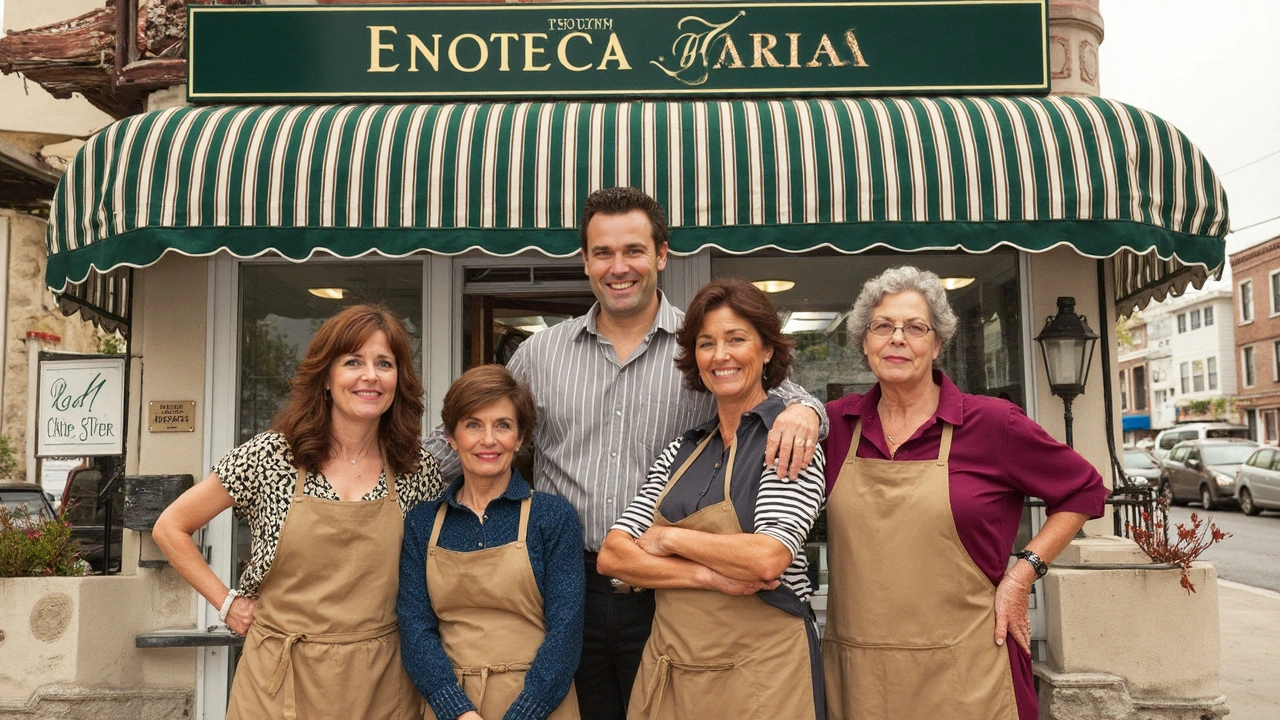
Inside Netflix's 'Nonnas': The Outlaw Film That Feeds the Soul
When you think of an “outlaw movie,” you probably picture bank heists or rebel gangs—not a small Italian restaurant staffed entirely by grandmothers. But that’s exactly the vibe Vince Vaughn brings to Netflix’s latest sensation, Nonnas. The film takes a slice of real New York life and turns it into a story packed with warmth, guts, and more pasta than you can imagine.
Vaughn ditches the usual slick-operator persona and steps into the shoes of Joe Scaravella, the Staten Island man behind Enoteca Maria. After losing his beloved mother Maria, Joe doesn’t just grieve—he channels his loss into something wildly unconventional. Instead of hiring typical chefs, he invites elderly women—affectionately called “nonnas”—from around the world to run his kitchen. Scaravella’s bold move shocks both his family and his neighborhood, especially when he ropes in his own grandmother Domenica as the culinary anchor.
Stephen Chbosky, who first made waves with The Perks of Being a Wallflower, directs with his signature mix of gentle humor and vibrant emotion. Screenwriter Liz Maccie nails the beats between comedy and drama, weaving in scenes that feel personal, even if you’ve never heard of Staten Island or tasted real sfogliatelle. You can almost see the steam rise from the plates and smell the tomato sauce through your screen.
But the film would be nothing without its brilliant supporting cast. Susan Sarandon, Talia Shire, Lorraine Bracco, and Brenda Vaccaro bring the “nonnas” vividly to life. Their on-screen bickering, stories of lost homelands, and pure love for family make the restaurant feel like more than a place to eat—it’s a living memory bank. Linda Cardellini pitches in for a few scene-stealing moments, adding even more heart to the mix.
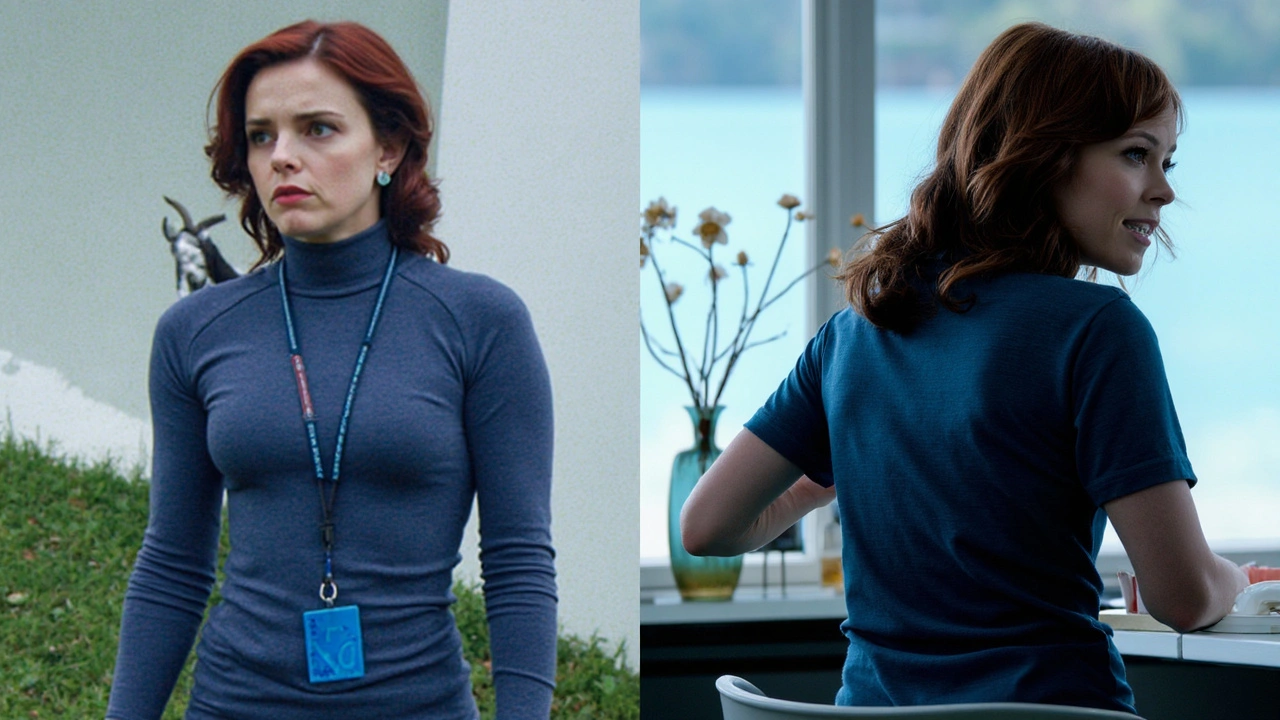
How a Tiny Restaurant Became a Million Netflix Hit
Here’s where things get wild: Nonnas wasn’t even supposed to be a big Netflix play. It was set for a run at the Toronto International Film Festival, but the buzz caught fire behind the scenes. Netflix jumped in with a jaw-dropping $20 million offer, sparking an old-school bidding war—a move almost unheard of in today’s chilly market for indie films. Clearly, something about Joe’s story hit the streaming giant right where it counts.
The timing couldn’t have been more perfect. Dropping on May 9, 2025—just in time for Mother’s Day weekend—Nonnas tapped into a wave of family nostalgia and landed as the top film in the country. People wanted comfort, tradition, and the feeling of family. Nikki, 32, a viewer from Brooklyn, said, “After watching it, I called my grandma and begged for her meatball recipe.” That’s the kind of reaction you can’t fake.
The real Enoteca Maria still sits near Staten Island’s ferry terminal, its walls a quirky mix of family photos and superhero tribute. Locals will tell you, it’s not just a restaurant—it’s a place where stories, recipes, and history get passed down with every plate. Scaravella’s gamble paid off, but not just in profit. The success of both the movie and the real nonnas proves that traditions don’t have to fade away, no matter how fast the world spins.
Netflix’s bet on Nonnas fits right in with the company’s new appetite for movies that focus on uplifting, family-driven tales. In a time when algorithms shape our screens and attention spans have gotten shorter, it’s rare to find a film that makes you want to press pause and call someone you love. But that’s the real magic here, both on the table and on the screen.
Eric DE FONDAUMIERE
May 25, 2025 AT 17:51Vince does a grate job!
Pauline Herrin
May 26, 2025 AT 19:20While the premise of integrating senior chefs into a modern culinary establishment is commendable, the execution appears somewhat contrived. The screenplay oscillates between sentimental indulgence and perfunctory exposition, resulting in a tonal inconsistency that undermines the intended emotional resonance.
pradeep kumar
May 27, 2025 AT 23:15The film's sentimentality feels manufactured, and the pacing suffers from unnecessary subplots. Moreover, the representation of the nursing nonnas borders on stereotype.
love monster
May 28, 2025 AT 01:53The narrative architecture deftly intertwines intergenerational mentorship with the operational dynamics of a boutique hospitality venture.
By leveraging the concept of "culinary legacy pipelines," the film illustrates how tacit knowledge transfer can be codified within a service ecosystem.
The protagonist's decision to curate a rotating roster of veteran matriarchs functions as a strategic human capital diversification model.
This approach simultaneously mitigates talent attrition and enriches the guest experience through authentic cultural signifiers.
From a production standpoint, the mise-en-scène replicates the kinetic ambience of a high‑frequency kitchen while preserving the intimacy of familial rituals.
The cinematography employs a shallow depth of field to foreground the tactile interplay of dough and sauce, thereby accentuating sensory immersion.
Sound design integrates ambient clatter with a subtle sous‑vide soundtrack, reinforcing the thematic undercurrent of resilience.
The casting of seasoned actresses lends a gravitas that aligns with the diegetic authenticity of the setting.
Their improvisational dialogues serve as a form of narrative scaffolding that bridges scripted beats with organic storytelling.
Moreover, the film's pacing adheres to a modular rhythm, allocating deliberate interludes for character backstory exposition without compromising plot momentum.
The strategic release timing, coinciding with a familial holiday, maximizes affective engagement and viewer recall.
In terms of market analytics, the $20 million acquisition by Netflix exemplifies a data‑driven gamble on niche, heart‑centric content.
The subsequent viewership surge validates the hypothesis that audiences gravitate toward emotionally resonant, food‑centric media during periods of collective nostalgia.
From an entrepreneurial perspective, the real‑world Enoteca Maria serves as a case study in brand extension and experiential marketing.
Its sustained relevance underscores the viability of heritage‑driven business models in contemporary urban economies.
Ultimately, the film functions as both an artistic tribute and a pedagogical blueprint for integrating cultural capital into modern enterprise.
Christian Barthelt
May 28, 2025 AT 18:33Everyone seems to praise the film's heartwarming vibe, yet the dialogue betrays an overreliance on clichés. The cinematography, while competent, fails to innovate beyond standard kitchen shots. It's a decent watch only if you disregard the lack of narrative daring.
Ify Okocha
May 28, 2025 AT 21:20The analysis overlooks the intentional simplicity that mirrors the film's thematic focus on authenticity. By dismissing the straightforward visual language, you neglect the director's purposeful restraint. The lack of overt stylistic flourish is, in fact, a calculated narrative decision.
William Anderson
May 29, 2025 AT 08:26Honestly, the whole concept reeks of pretentious nostalgia, as if the filmmakers were trying too hard to milk every tear. The performances feel like audition reels for a senior citizen talent show, and the script flirts with melodrama at every turn. If you crave depth, look elsewhere; this is cinematic sugar‑coating.