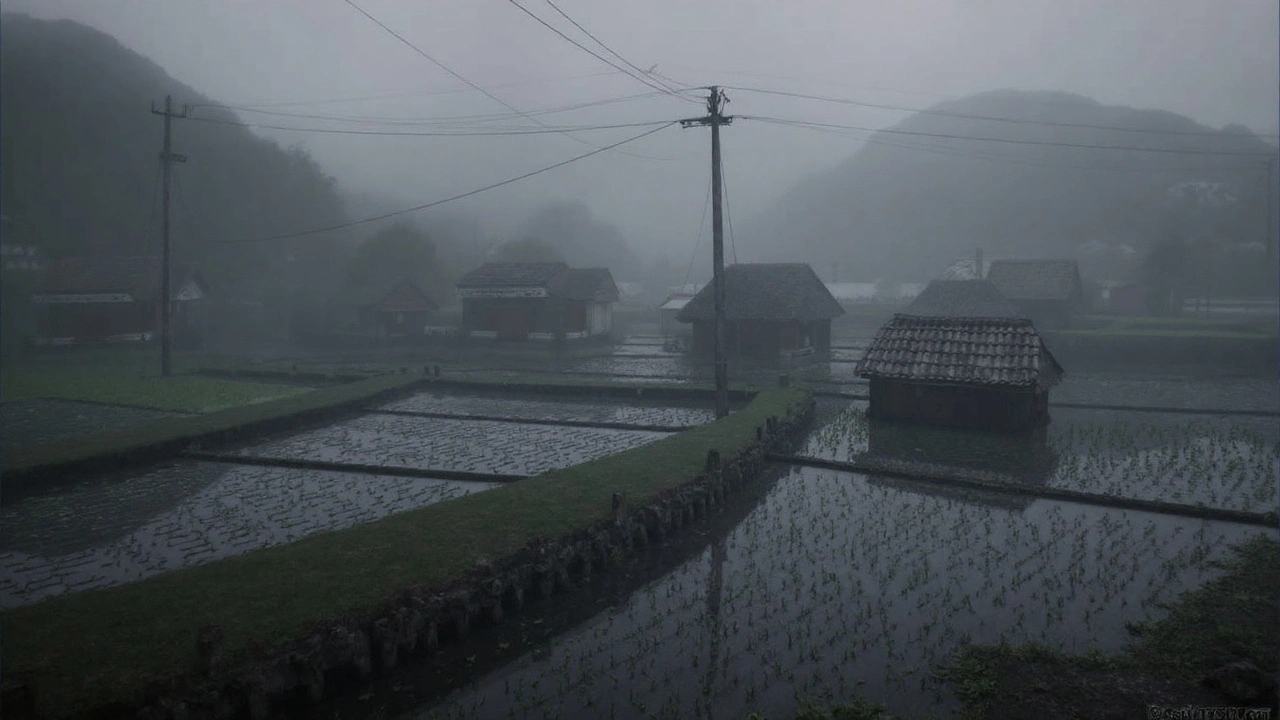
The Silent Hill revival has split into two paths, and they feel nothing alike. On one side is Silent Hill f, a systems-heavy horror game built around timing, counters, and a sanity meter. On the other is Silent Hill 2 Remake, a faithful modernization of a 2001 classic with a new camera, cleaned-up pacing, and a sharper, more cinematic presentation. Different studios, different goals: Silent Hill f (a new story set in Japan with a teenage lead, Hinako) chases mechanical tension, while Bloober Team’s Silent Hill 2 Remake sticks close to James Sunderland’s original journey and its mood.
Combat, sanity, and resources: the moment-to-moment split
Combat sets the tone immediately. Silent Hill f introduces focus mode—hold L2, the world slows, and enemy attacks read like clean, readable beats. Counter prompts linger just long enough to invite you in, then punish greedy timing. When you land a counter, the damage is real, and the fight’s tempo flips. It feels like the game is teaching you to wait, watch, and strike when the window opens.
Silent Hill 2 Remake goes the other way. It banks on fast, precise dodges with short invincibility frames. The room never slows to help you read an enemy; you’re expected to understand spacing and commit. When you get hit, the feedback is immediate. When you dodge cleanly, it’s all you. It’s classic survival horror feel with modern responsiveness, but it can be less forgiving moment to moment.
The sanity system in Silent Hill f is the big swing. Focus is power, but it drains sanity. Drop too low and re-entering focus becomes harder, so every slow-mo counter or charged power attack is a trade. You can fill a focus gauge for heavy, staggering attacks, but you’re also burning through your mental reserve to do it. That risk-reward loop creates tiny, nasty dilemmas every few seconds: do you cash in the advantage now, or save sanity for the next encounter that might spiral?
Silent Hill 2 Remake keeps psychological pressure mostly off the HUD. James’s mental state shows up in how he moves, how scenes play, and how spaces feel, not on a meter you juggle. It’s less about tactical choices a minute at a time, and more about long arc storytelling—guilt, memory, and the kind of dread that creeps in between fights rather than during them.
Resources push the games even further apart. Silent Hill 2 Remake drew heat from veteran players who finished with piles of ammo and supplies, which blurred the survival edge if you’re careful. Silent Hill f solves the opposite problem: it makes resources count. A tradable-resource setup means every pickup can be used, swapped, or banked, and you feel the tension of choose-this-or-that often. It’s still survival horror, but closer to a budgeting game under pressure.
Weapon feel follows that split. In Silent Hill f, each weapon has distinct reach and motion—short, quick arcs on a knife; a heavier, deliberate swing on a bat. Hinako is a teen, not a bruiser, so committing to a heavy attack means living with its wind-up and recovery. That weight is part of the fear. In Silent Hill 2 Remake, the arsenal feels familiar and grounded, and the drama comes from timing and positioning, not long chains of counters or stance changes.
All of this affects who can play comfortably. Focus mode in Silent Hill f is a built-in accessibility lever, stretching attack windows and slowing the action for players who need help reading tells. The Remake expects you to learn the rhythm of each enemy and time dodges tightly. Both offer difficulty options, but Silent Hill f builds its safety net into core combat, which makes its systems feel welcoming without becoming easy.
World, cameras, puzzles, audio, and how the story lands
Camera choices define what you see and what you feel. Silent Hill 2 Remake switches to an over-the-shoulder view, ditching the old semi-fixed camera for something closer to modern horror. It costs more to render—suddenly, every corner needs detail—yet the team uses fog, shadow, and reflective surfaces to hold on to that oppressive mood. In tight corridors, the camera squeezes in with you, keeping the town’s claustrophobia intact.
Silent Hill f also moves away from classic angles, but leans into framing that supports focus mode. During slow-mo, the view subtly centers the threat, letting you read telegraphs without losing the scene. It’s less about cinematic presentation and more about clarity under stress. The trade-off is intentional: style in service of mechanics.
Enemies show the split in philosophy. Silent Hill 2 Remake rebuilds familiar silhouettes with modern animation and texture work, holding tight to metaphor—the monsters as reflections of James’s mind. Silent Hill f designs its foes to be read in combat: jittery mannequin-like bodies, acidic telegraphs, and demonic forms that match Hinako’s cultural context. You always get a tell, but not always the same one twice, which keeps the counters tense.
Level design mirrors that. Silent Hill 2 Remake connects its routes more cleanly than the original—apartments, hospital, streets—so you flow toward story beats without signposts or a big glowing arrow. Audio cues, trails, and staged moments steer you gently. It’s a quiet fix for the pacing issues long-time fans remember, and it doesn’t spoil the mystery.
Silent Hill f builds rooms around its mechanics—line-of-sight breaks, chokepoints that beg for a counter, and pockets where you can reset and buy a breath. Encounters feel staged, but the systems make each one play differently because your sanity and focus meter change how bold you can be. You can tell the spaces were drawn with those dials in mind.
Puzzles are another fork. The Remake remixes or relocates classic puzzles and cuts a few, replacing them with “glimpses of the past”—flash-like callbacks to the original that the trophy system even tracks. That choice has lore implications fans will argue about for years, especially the hint that James might be stuck in loops. Silent Hill f, from what we’ve seen in hands-on demos, blends puzzles into traversal and resource economy rather than stopping the game cold for a riddle; observation and restraint pay off more than brute-force item use.
Audio and performances carry a lot of weight. Silent Hill 2 Remake uses new voice direction but keeps that slightly uncanny delivery that defines the series, now backed by performance capture that lets micro-expressions and body language say what words don’t. Silent Hill f’s combat audio is surgical by design—distinct tells for lunge, grab, and slam—so you can play by ear when the screen gets messy. Ambient soundscapes in both games do the heavy lifting: floorboards, wind, distant cries, and the kind of silence that makes you hold your breath.
Technically, both push modern hardware, just in different ways. The Remake leans on lighting, weather, and reflections to build pressure in stillness. Silent Hill f flexes animation systems and state changes—how enemies wind up, react, and stagger in and out of focus mode. Either way, the tech is there to make you feel small and hunted.
Character vulnerability lands differently too. In Silent Hill f, your mind is a resource, and the mechanics make that literal. Spend too much sanity and your options shrink, so fear lives in your HUD as much as in the hallway ahead. In Silent Hill 2 Remake, James’s fragility bleeds through the world—how he looks at a body, how a room feels wrong, how a line reading lingers a beat too long. Both approaches serve the same goal through opposite means.
If you’re wondering which game is “more Silent Hill,” the answer depends on what that means to you. If Silent Hill is about systems that grind you down and force ugly choices, Silent Hill f has your number. If it’s about quiet dread, patient storytelling, and spaces that feel haunted before anything moves, the Remake is where you’ll live.
- 15 ways Silent Hill f differs from Silent Hill 2 Remake:
- 1) Combat tempo: slow-motion focus counters (f) vs tight i-frame dodges (Remake).
- 2) Readability: on-screen counter telegraphs (f) vs animation-only tells (Remake).
- 3) Sanity meter: a spendable mental resource (f) vs implied psyche through narrative (Remake).
- 4) Power spikes: charged focus attacks that stagger (f) vs standard heavy/light commitment (Remake).
- 5) Resource economy: tradable, choice-heavy pickups (f) vs comparatively generous stockpiles (Remake, on normal play).
- 6) Camera philosophy: clarity-first framing around focus (f) vs cinematic over-the-shoulder tension (Remake).
- 7) Enemy design: creatures built around counter windows (f) vs symbolic remakes of classics (Remake).
- 8) Level construction: arenas tuned for counters and resets (f) vs connected routes and smoother flow (Remake).
- 9) Navigation: mechanical pressure guides movement (f) vs environmental cues and staging (Remake).
- 10) Puzzles: integrated into traversal and resource choices (f) vs remixed puzzles and “glimpses of the past” (Remake).
- 11) Weapon variety: broader motion sets and reach differences (f) vs a lean, familiar arsenal (Remake).
- 12) Accessibility: focus mode extends timing windows (f) vs higher reliance on reflex and spacing (Remake).
- 13) Audio cues: crisp combat tells by design (f) vs mood-first sound and uncanny delivery (Remake).
- 14) Technical focus: animation state changes under slow-mo (f) vs lighting, fog, and weather artistry (Remake).
- 15) Setting and tone: a new story with a young lead in Japan (f) vs a faithful return to James’s journey in Silent Hill (Remake).
One more thing to call out: pacing. Silent Hill 2 Remake trims friction without rushing you. It respects the old rhythm but sands down the parts that stalled the 2001 flow. Silent Hill f keeps friction front and center. It wants your every decision to feel costly, and it uses systems to make that happen.
For players, that split is good news. If you want a clean entry point into a landmark story, the Remake is built for you. If you want to wrestle with new mechanics under pressure—and you like the idea of turning your mental state into a resource—Silent Hill f is the more daring bet. They’re not competing so much as covering different corners of the same haunted house.
Expect the debates to run hot. Purists will argue puzzle cuts and line readings in the Remake. Systems fans will argue about sanity balance and whether focus mode is too generous in Silent Hill f. That tension is healthy. It means Silent Hill isn’t stuck in one era or one idea of fear. It’s moving in two directions at once—and both feel scary for the right reasons.
Jared Greenwood
September 20, 2025 AT 18:44The focus/slow‑mo mechanics in Silent Hill f are a textbook case of American indie studios co‑opting Japanese horror tropes to boost export numbers. Their design pipeline is basically a glorified sprint‑and‑counter loop that sacrifices atmosphere for "skill‑based" depth. Any true fan of the franchise sees this as a betrayal of the series’ core identity.
Sally Sparrow
September 23, 2025 AT 22:58The article tries to paint both games as equals, but it glosses over the fact that the Remake leans on nostalgia without innovating. Its "modern lighting" tricks feel like a Band‑Aid over a decades‑old design flaw. The f version, while mechanically noisy, actually forces players to engage with the horror on a systems level.
Eric Yee
September 27, 2025 AT 03:12Silent Hill f spins a new web of pressure it feels fresh and oddly familiar the sanity meter becomes a living gauge of tension the focus mode really changes how you read a fight
Sohila Sandher
September 30, 2025 AT 07:26I think both games bring something good to the table – the Remake keeps the story you love, and f adds a fresh gameplay loop that’s definitely worth a try. It’s not perfect but defiantly fun!
Anthony Morgano
October 3, 2025 AT 11:40Wow, the focus mode in f looks insane 😮! If you love timing your attacks, you’ll probably love the slow‑mo counters. The Remake’s dodge feels slick though, so pick what vibe you’re after.
Holly B.
October 6, 2025 AT 15:54From a design perspective the resource economy in Silent Hill f introduces a meaningful trade‑off that the Remake lacks. It encourages deliberate planning rather than stockpiling ammunition.
Lauren Markovic
October 9, 2025 AT 20:08Quick tip: when you’re low on sanity in f, try switching to a lighter weapon to conserve focus. It’ll keep you in the fight longer 😊
Kathryn Susan Jenifer
October 13, 2025 AT 00:22Oh great, another game that tells you to “feel the dread” while serving you a side of cooking‑show tutorial. If you wanted a lecture on existential angst, you’d be better off reading a philosophy textbook.
Jordan Bowens
October 16, 2025 AT 04:37Both titles look decent but I’m not gonna spend hours on them.
Kimberly Hickam
October 19, 2025 AT 08:51When dissecting the design philosophies of Silent Hill f versus the Silent Hill 2 Remake, one must first acknowledge the sheer audacity of bifurcating a franchise that has historically thrived on a singular, oppressive atmosphere. The f iteration thrusts the player into a kinetic ballet of focus mode, where time dilates, and every counter becomes a high‑stakes gamble against a dwindling sanity reservoir. This mechanic, while seemingly gimmicky, actually imposes a relentless cognitive load that mirrors the protagonist’s own psychological fragmentation. In contrast, the Remake opts for a more cinematic pacing, employing over‑the‑shoulder framing to immerse the player in James Sunderland’s lingering guilt without the overt numerical distractions. The juxtaposition of these two approaches creates a dialogue about what horror should feel like: an active systems‑driven struggle or a passive narrative descent. Moreover, the resource management in f is meticulously interwoven with combat, forcing the player to decide whether to spend focus for immediate power or conserve it for future encounters, a decision tree that expands with each enemy encounter. Meanwhile, the Remake’s resource pools feel generous, arguably diminishing the survival tension that defined the original. The enemy design further accentuates this split; f’s foes are engineered with clear telegraphing cues that reward player vigilance, whereas the Remake’s creatures serve as symbolic extensions of James’s inner demons, offering an interpretive horror rather than a mechanical one. Audio design also diverges: f employs crisp, percussive cues that sync with slow‑mo counters, while the Remake relies on ambient, rumbling soundscapes to heighten dread. From a narrative standpoint, the f story, set in Japan with a teenage lead, introduces cultural motifs that broaden the series’ thematic palette, yet some may argue it strays too far from the series’ core identity. The Remake, faithful to its source, preserves the melancholic exploration of regret and memory that made the original a classic. In terms of accessibility, f’s focus mode extends timing windows, offering an inclusive entry point without sacrificing challenge, whereas the Remake demands precise reflexes that may alienate less dexterous players. Technologically, both titles push the current hardware, but they allocate their resources differently-f towards animation fidelity and state changes, the Remake towards lighting and environmental fidelity. Ultimately, the decision of which experience resonates more heavily depends on whether the player seeks a system‑centric survival horror or a story‑driven psychological journey. Regardless of preference, both games contribute valuable chapters to the Silent Hill legacy, proving that the franchise can evolve without losing its haunting core.
Gift OLUWASANMI
October 22, 2025 AT 13:05The claim that the Remake simply “updates graphics” is a myopic reduction of a series that has always interrogated the human condition through a lens of industrial decay and metaphysical dread; to reduce it to “shiny textures” is an insult to the intellectual rigor that the original demanded.
Keith Craft
October 25, 2025 AT 17:19Dearest readers, let us not pretend that the mere presence of a new camera angle can resurrect a soul‑crushing masterpiece; yet, I must admit the over‑the‑shoulder perspective does whisper sweetly to our modern sensibilities, coaxing tears from even the most stoic hearts.
Kara Withers
October 28, 2025 AT 20:33If you’re struggling with sanity depletion in f, consider mixing melee attacks with ranged weapons to stagger enemies without draining focus. This approach lets you maintain pressure while preserving your mental reserve for tougher encounters.
boy george
November 1, 2025 AT 00:47The Remake feels smoother.
Cheryl Dixon
November 4, 2025 AT 05:01While the extensive breakdown highlights admirable ambition, one could argue that piling layers of mechanics dilutes the pure existential terror that made Silent Hill infamous, turning horror into a spreadsheet of choices.
Charlotte Louise Brazier
November 7, 2025 AT 09:15Sure, that tip works, but if you’re not willing to sacrifice a few bullets for sanity, you’ll never grasp the true intensity f demands.
Donny Evason
November 10, 2025 AT 13:29Indeed, the balance between resource thrift and combat aggression is the crucible in which the player’s own philosophy is forged, reflecting broader cultural narratives about sacrifice and resilience.