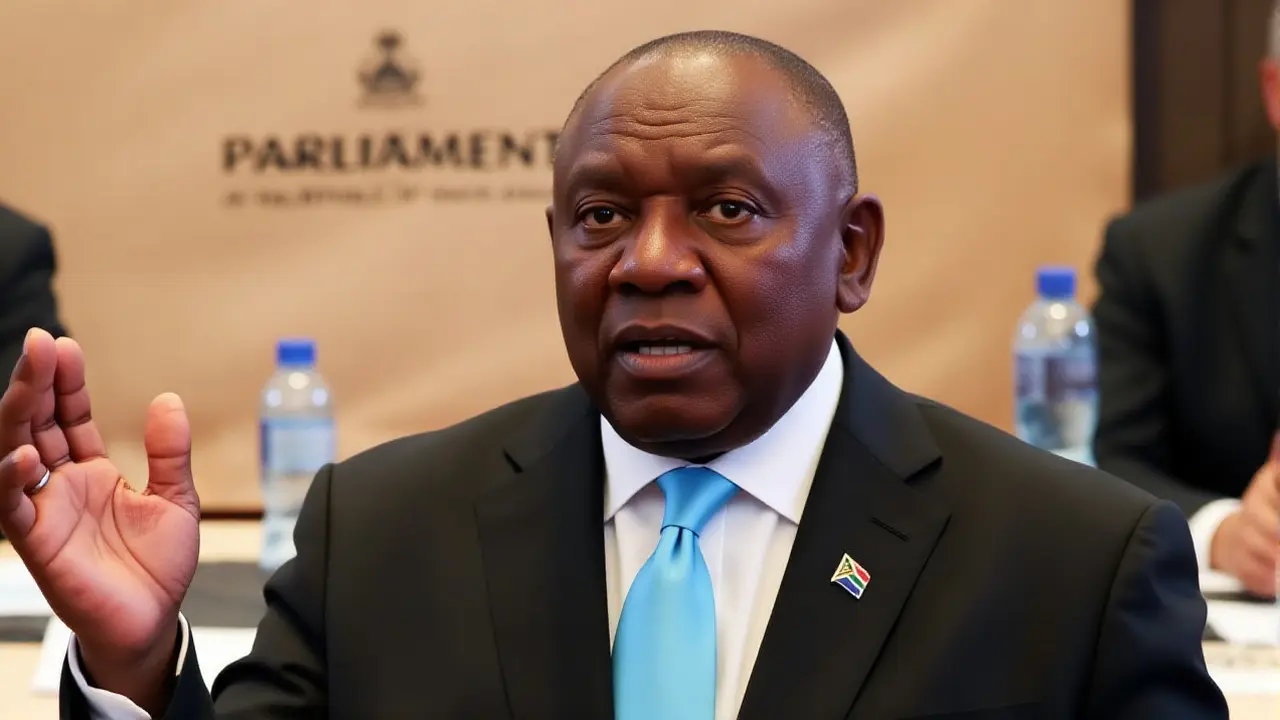
The South African National Defence Force (SANDF) has officially moved into high-crime hotspots across the Western Cape, focusing its boots on the ground in the notorious Cape Flats. The move comes after Cyril Ramaphosa, the President of South Africa, announced the deployment during his February 2026 State of the Nation address. It's a high-stakes attempt to wrestle control back from gangs who have turned residential streets into war zones, with the military now tasked to support police in a desperate bid to lower the body count.
Here's the thing: this isn't just a routine patrol. The deployment follows a terrifying spike in violence that left residents feeling abandoned. In the days leading up to the military's arrival, the region saw a brutal stretch where three people were gunned down in separate gang-related hits in a single night. The carnage didn't stop there; a 29-year-old taxi driver was killed in Delft, and a 19-year-old man was shot dead in Muizenberg. For those living there, the sound of gunfire has become a grimly familiar soundtrack.
A Mandate for Intelligence and Order
The operational goals are being spearheaded by Thembisile Patekile, the Provincial Police Commissioner, who is coordinating the military's integration with local law enforcement. According to official SANDF communications, the soldiers aren't just there for show. Their specific mandate is to "plan, orchestrate, command and control robust intelligence-driven operations." In plain English? They're trying to use military-grade intelligence to map out gang hierarchies and strike precisely, rather than just patrolling the perimeter.
The strategy involves coordinated projects where SANDF members and police work side-by-side. It's a joint effort designed to create a "security blanket" over the most volatile areas. The hope is that the sheer presence of the army—combined with better data—will deter the open warfare that has plagued the Flats. But as any local will tell you, the Cape Flats is a complex maze of loyalties and hidden hideouts; a uniform alone rarely solves the problem.
- Official Start: Following the February 2026 State of the Nation address.
- Primary Target: The Cape Flats region of the Western Cape.
- Core Objective: Intelligence-driven operations to dismantle gang violence.
- Key Actors: SANDF, SAPS, and the Office of the President.
- Trigger: Escalating fatalities, including multiple killings in a single night.
Community Relief and the 'Siege' Mentality
For the Cape Flats Safety Forum, this deployment is a hard-won victory. This community advocacy group hasn't just been asking for help; they've been screaming for it. They've maintained a campaign for military intervention since December 16, 2022, a date they pinpoint as the moment the Cape Flats officially came "under siege."
Turns out, it took over three years of lobbying and a mounting death toll for the government to act. The Forum welcomed the soldiers with open arms, seeing the move as a validation of their long-term struggle. For them, the military isn't an intrusion—it's a lifeline. They argue that the local police are simply overwhelmed and outgunned by the syndicates controlling the drug trade and territorial boundaries.
The Skeptics: Will History Repeat Itself?
But wait, not everyone is celebrating. There's a growing chorus of analysts questioning the actual strategy behind this move. The big concern? Memory. Specifically, the memory of the 2019 military intervention in the same region. That previous attempt is often cited as a cautionary tale—a move that looked good on paper but lacked the surgical precision needed to actually break the gangs' grip.
Experts are warning that deploying the army without a mountain of data is a recipe for failure. One analyst put it bluntly, stating that deploying troops without proper analysis "will not result in anything substantial." The worry is that the 2026 operation might be another "band-aid solution"—a visible show of force that fades away once the news cameras leave, leaving the gangs even more entrenched than before.
The Human Cost and the Path Forward
Reporting from the heart of the Flats, SABC News reporter Mariska Botha witnessed the initial rollout. She noted the precision of the arrival, with personnel moving into position within an hour of the operational start. However, the atmosphere remains tense. The residents are caught between the relief of seeing soldiers and the fear that their presence might actually trigger more violent retaliation from gangs trying to maintain their dominance.
The broader implication here is a troubling admission by the state: the police alone cannot keep the peace. By bringing in the SANDF, the government is acknowledging a systemic failure in urban policing. The success of this mission won't be measured by how many soldiers are on the street, but by whether a taxi driver in Delft can work his shift without fearing for his life.
Historical Context of Military Intervention
This isn't the first time the South African government has turned to the military for domestic policing. The 2019 intervention was characterized by high-visibility patrols, but critics argued it lacked the deep-cover intelligence needed to arrest the "kingpins" of the gangs. Instead, it mostly targeted low-level foot soldiers.
The gap between 2019 and 2026 has seen an evolution in gang weaponry, with the increased prevalence of high-caliber firearms and encrypted communication. If the SANDF is using the same playbook from seven years ago, they are fighting a 2026 war with a 2019 map. The real test will be the "intelligence-driven" part of their mandate.
Frequently Asked Questions
Why is the SANDF being deployed instead of just increasing police numbers?
The deployment is a response to the extreme level of violence in the Cape Flats, where gang members often possess military-grade weaponry. The SANDF provides superior logistical support and intelligence capabilities that the local police currently lack, allowing for a more robust presence in "no-go zones" where police are often outnumbered or outgunned.
What happened during the 2019 military intervention?
In 2019, the army was similarly deployed to curb gang violence, but the effort was widely criticized for being too focused on visibility rather than intelligence. While it created a temporary lull in violence, it failed to dismantle the core leadership of the gangs, leading to a resurgence of crime shortly after the troops withdrew.
Who is the Cape Flats Safety Forum?
The Cape Flats Safety Forum is a community-led advocacy organization that represents residents living in crime-ridden areas of the Western Cape. They have spent years lobbying the government for more drastic measures, claiming the region has been "under siege" since late 2022 due to uncontrollable gang warfare.
What specific crimes triggered this deployment in 2026?
The deployment was accelerated by a series of brutal killings, including three gang-related deaths in a single night. Other high-profile incidents included the murder of a 29-year-old taxi driver in Delft and the shooting of a 19-year-old in Muizenberg, signaling an escalation that the government deemed unacceptable.
Gary Clement
April 15, 2026 AT 23:01intelligence driven ops are the only way this works. just putting boots on the ground without a map of who is who is basically useless and we saw that in 2019
Antony Bachtiar
April 16, 2026 AT 03:28lol here we go again. a total waste of taxes if u ask me. gov thinks they can just drop some soldiers and everything becomes magicly fine. its never gonna work
nikolai kingsley
April 17, 2026 AT 03:36absolutly disgusting that it took 3 years for them to act while people were dying. the goverment is utterly faild the people here and it is a moral disaster
Aaron X
April 18, 2026 AT 22:04The systemic failure of urban policing here represents a profound teleological crisis in state sovereignty. When the state resorts to military praxis to maintain domestic order, it admits a collapse of the social contract and an inability to exercise legitimate hegemony through traditional judicial conduits. We are seeing a paradigm shift where the distinction between internal security and external defense is completely blurred, effectively creating a state of exception within the Cape Flats. This heuristic approach to gang mitigation likely ignores the socio-economic causality that fuels such volatility. Until the structural inequities are addressed, the deployment remains a superficial overlay on a deep-seated societal fracture, merely shifting the equilibrium of power without eradicating the source of the conflict. It is a classic example of treating the symptom rather than the pathology of the urban environment. The juxtaposition of military force against asymmetric gang warfare often results in a temporary cessation of violence rather than a sustainable peace. Such interventions frequently lack the nuanced sociological data required to penetrate the subterranean layers of gang loyalty. Without a comprehensive reconfiguration of the socio-economic landscape, the SANDF is essentially engaging in a tactical skirmish while the strategic war is lost. This is a performative act of governance designed to appease the populace rather than a calculated strategy for long-term stability. The risk of collateral damage in these densely populated zones is astronomical. The cognitive dissonance between the government's rhetoric of 'intelligence' and the reality of boots-on-the-ground brute force is palpable. We are witnessing a desperate attempt to reclaim a narrative of control over a territory that has long since slipped through the fingers of the administrative state. This is not a solution; it is a confession of failure.
Josh Raine
April 19, 2026 AT 15:29why do we always do the same thing and expect a different result? :) it's just a cycle of failure at this point. the government is literally just playing with people's lives for a press release! 😡
Shelley Brinkley
April 20, 2026 AT 15:30probly just gonna be more corruption. soliders get paid to stand there and do nothing while the big bosss keep selling drugs. what a joke
Dianna Knight
April 22, 2026 AT 13:23Sending so much love and strength to everyone in the Cape Flats right now! ❤️ It is so heartening to see the community's voice finally being heard by the authorities. Hopefully, this new framework for operational synergy between the SANDF and local police can actually create a sustainable safety net. We really need to focus on the holistic recovery of these neighborhoods beyond just the security aspect. Keep holding on! 🌟
Beth Elwood
April 22, 2026 AT 16:35Exactly what the Safety Forum has been saying for years! 👏 The police were way out of their depth with those weapons 🔫. Hopefully this time they actually use the data they have 📊.
Angie Khupe
April 23, 2026 AT 02:54I just hope this brings some peace to the families who have lost so much. Maybe this will actually work this time around :) ❤️
Mel Alm
April 24, 2026 AT 10:29honestly the police just dont have the gear to deal with this stuff. its a mess
Mason Interactive
April 26, 2026 AT 00:30It's wild how the sound of gunfire is just part of the daily routine for some people. Really puts things into perspective when you live in a quiet suburb.
Alex Green international
April 26, 2026 AT 22:34The situation is indeed grave and one must hope for the best for the residents of the Western Cape. It is a difficult path forward
Suman Rida
April 28, 2026 AT 07:38I hope the residents feel safer with this move
sachin sharma
April 30, 2026 AT 00:44Just chilling and watching this unfold. Hopefully the soldiers actually make a difference this time around
Ashish Gupta
May 1, 2026 AT 03:31Let's go!! 🚀 Time to clean up the streets and get things back on track! Everyone deserves to feel safe in their own home! 💪🔥
Pranav nair
May 2, 2026 AT 03:29Heavy stuff man. Hope it actually works out for the people there :)
Suraj Narayan
May 3, 2026 AT 08:30Finally some real action! Stop playing around and get the gangs out of those neighborhoods once and for all!
Rashi Jain
May 4, 2026 AT 12:20From a technical perspective, the integration of military intelligence with civilian policing requires a very specific set of interoperability protocols that are often overlooked in these rapid deployments, which leads to the gaps we saw in 2019 where the army was just doing basic patrols instead of targeting the actual nodes of the criminal networks, so if they are truly using a data-driven approach this time, they need to ensure the information flow between the SAPS and the SANDF is seamless and not hindered by bureaucratic silos that typically plague government operations in South Africa.
Dr. Sanjay Kumar
May 5, 2026 AT 02:29The irony of deploying an army to fight gangs in your own city is just peak 2026. Absolutely mental if you think about it!
Arumugam kumarasamy
May 5, 2026 AT 10:47It is utterly pathetic that people are surprised by the failure of 2019. Only a complete amateur would think that a simple troop deployment without a total overhaul of the judicial system would work. The incompetence of the administration is truly staggering, yet they expect us to applaud this latest gesture of perceived strength. It is a farce.