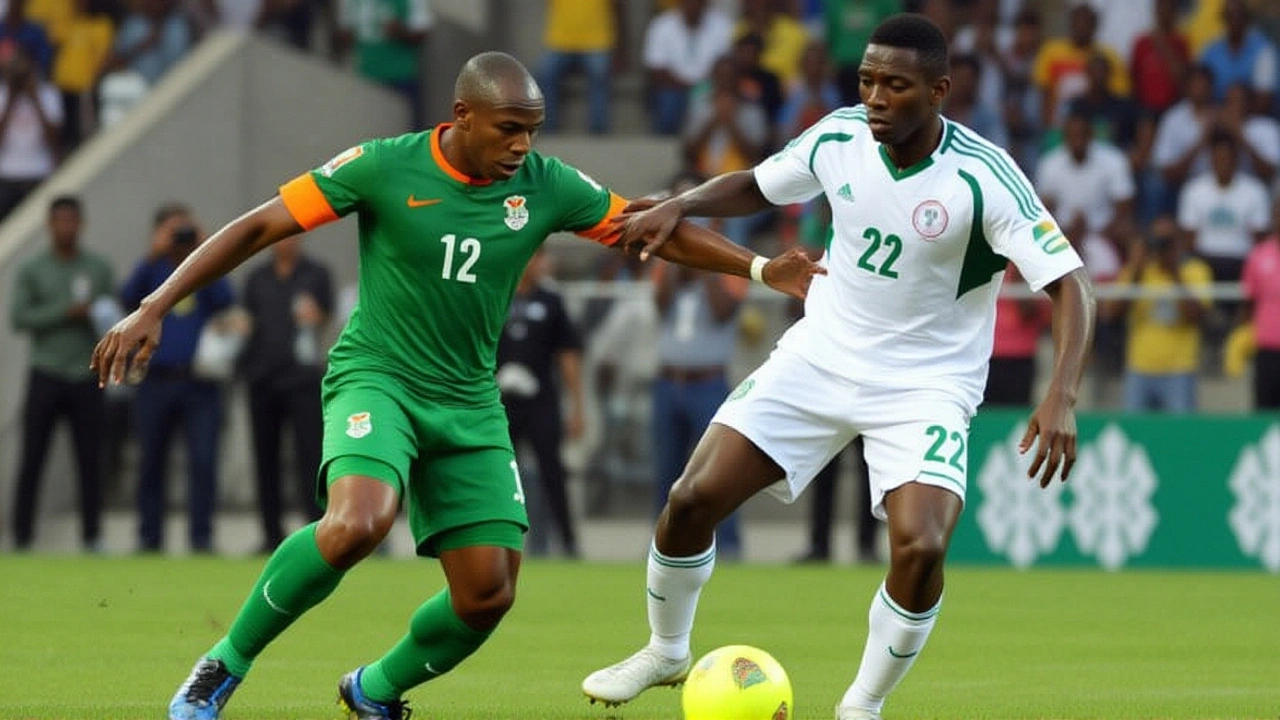
When Nigeria national football team walked onto the pitch at CAF third‑round World Cup qualifierLevy Mwanawasa Stadium, Ndola, they knew they were making history. The visiting side topped the 50,000‑strong crowd 2‑1, not only clinching a vital three points but also marking the Super Eagles’ first ever victory on Zambian soil.
- Final score: Zambia 1 – Nigeria 2
- Date: 9 October 2016
- Venue: Levy Mwanawasa Stadium, Ndola (capacity ~50,000)
- Referee: Bamlak Tessema Weyesa (Ethiopia)
- Goal scorers: Alex Iwobi, Kelechi Iheanacho (Nigeria); Collins Mbesuma (Zambia)
Background to the CAF Qualifying Campaign
The 2018 FIFA World Cup qualification in Africa kicked off its third round in October 2016, with twenty teams split into five groups of four. Nigeria national football team landed in Group B alongside Cameroon, Algeria and the Zambia national football team. A win meant three points, a draw one, and a loss none – simple enough, but the stakes were sky‑high. Only the group winners earned a direct ticket to Russia.
For Nigeria, the pressure was two‑fold. First, a youthful side under German coach Gernot Rohr was still finding its rhythm after a relatively quiet 2015‑16 season. Second, the nation craved an away win – something they had never accomplished in Ndola.
Matchday: Ndola, October 9, 2016
The atmosphere inside the stadium was electric. The home crowd roared as the Zambian team entered, confident after an unbeaten run at the venue. Yet within the first ten minutes, Nigeria’s midfield began to dictate play. Early pressure paid off when Alex Iwobi, the 20‑year‑old Liverpool prospect, slipped a ball past Zambian defender and fired low into the net.
Just twelve minutes later, Kelechi Iheanacho, the Leicester City forward, latched onto a quick counter‑attack and tapped home the second. By halftime the score read 2‑0, and the Super Eagles were already breathing easier.
The second half belonged to Zambia. In the 71st minute, striker Collins Mbesuma capitalised on a defensive lapse, rattling the ball into the net and sparking a wave of chants from the home fans. The goal injected tension, but Nigeria’s back line, marshalled by experienced centre‑backs, held firm for the remaining 20 minutes.
Key Moments and Player Performances
Beyond the goals, the match featured a few subtle storylines. Iwobi’s composure was remarkable for someone with just a handful of senior caps; his movement in the box hinted at a future star. Iheanacho’s finish was textbook – a first‑time strike that left the Zambian keeper flat‑footed.
Defensively, Nigeria relied on veteran centre‑back William Troost Ekong to organize the line, while full‑backs pressed high, preventing Zambia from building sustained attacks. On the Zambian side, goalkeeper Kennedy Mwewa made several crucial saves, especially after Mbesuma’s goal, keeping the defeat from becoming larger.
Reactions from Coaches, Players and Fans
After the final whistle, Rohr smiled broadly. “The boys showed maturity beyond their age,” he told reporters. “Winning away in a hostile environment proves we can handle pressure, and that’s exactly what we need for the rest of the campaign.”
Zambian coach—then‑coach‑in‑waiting Wedson Nyirenda—acknowledged the setback: “Losing at home hurts, but it’s a learning moment. We’ll regroup and look at what went wrong in the first half.”
Fans on social media mirrored the split emotions. Nigerian supporters celebrated with confetti‑filled streets in Lagos, while Zambian fans posted pictures of the empty seats that remained after the late goal, expressing disappointment but also hope for a comeback in the return leg.
Implications for Group B and World Cup Qualification
The three points vaulted Nigeria to the top of Group B, giving them a crucial cushion ahead of the remaining fixtures. In the end, Nigeria finished with 13 points (four wins, one draw, one loss), scoring 11 and conceding six – a goal difference of +5. Their triumphs over Cameroon (1‑0 away, 4‑0 home) and Algeria (3‑1 away) cemented their status.
Zambia, meanwhile, slipped to second place with eight points. Their win in the return leg against Nigeria later in the campaign (a 1‑0 home victory) narrowed the gap, but the earlier loss in Ndola proved decisive. Cameroon ended third with seven points, while Algeria fell to fourth.
By securing Group B, Nigeria locked in a berth at the 2018 FIFA World Cup in Russia, joining fellow African qualifiers Egypt, Morocco, Senegal and Nigeria’s own Group A winner (which turned out to be Ghana). The qualification marked the Super Eagles’ third World Cup appearance since 1994.
Looking Ahead: Nigeria’s Path to Russia 2018
After the Ndola win, Rohr’s side focused on consistency. The final group match, held on 13 November 2017 at Abuja’s Gabon Stadium, saw Nigeria clinch a 1‑0 victory over Zambia, with Iwobi again on the scoresheet. That result confirmed the group crown and set the stage for a pre‑World Cup build‑up period.
Analysts such as veteran pundit John Obika highlighted the young core’s growth: “These guys have tasted pressure, they’ve learned to win away, and they’ll bring that belief to Moscow.”
For Zambia, the Ndola defeat served as a catalyst for restructuring their youth development programs, a move that still echoes in their 2022‑23 qualifying campaigns.
Frequently Asked Questions
How did Nigeria’s win in Ndola affect their chances of qualifying for the 2018 World Cup?
The 2‑1 victory gave Nigeria three crucial points, putting them at the top of Group B early in the campaign. It created a buffer that allowed them to absorb a later draw and a single loss while still finishing with 13 points – enough to seal the group and the World Cup berth.
Who were the key goal scorers for Nigeria in the match?
Alex Iwobi opened the scoring in the 6th minute, and Kelechi Iheanacho doubled the lead in the 18th minute. Both players were under 22 at the time and later became regulars in the Super Eagles’ lineup.
What was the significance of the venue for Zambia?
Levy Mwanawasa Stadium had been a fortress for Zambia since its opening in 2012, with the team unbeaten there in World Cup qualifiers. The loss ended that streak and marked the first time Nigeria beat Zambia on Zambian soil.
What tactical changes did coach Gernot Rohr implement for this match?
Rohr opted for a high‑pressing 4‑2‑3‑1, trusting young attackers to exploit space behind the Zambian defense. He also kept an experienced centre‑back pairing to protect the back line, which proved decisive after Zambia’s late goal.
What were the broader implications for Zambian football after this defeat?
The setback prompted the Football Association of Zambia to reevaluate its youth scouting and coaching structures. Several academy projects received increased funding in an effort to avoid similar away losses in future qualifiers.
varun spike
October 12, 2025 AT 22:13The victory in Ndola illustrates Nigeria's evolving tactical discipline the side embraced a high‑pressing 4‑2‑3‑1 that disrupted Zambia's buildup early on Iwobi's low drive capitalised on space behind the defense and set the tone for the match Iheanacho's swift finish reinforced the effectiveness of quick transitions The defensive organization led by Troost‑Ekong limited Zambia's attempts after the break while the midfield maintained possession Pressure on the home side remained constant throughout the second half
Ayush Sanu
October 27, 2025 AT 01:35One observes a clear strategic superiority: Nigeria executed a high‑press, seized early possession, and neutralised Zambia's home advantage.
Chandan Pal
November 10, 2025 AT 05:56Wow, Nigeria finally cracked the Zambian fortress! 🎉 Iwobi and Iheanacho lit up the stadium, and even the locals could’t stop cheering for those goals 😎🏟️
SIDDHARTH CHELLADURAI
November 24, 2025 AT 10:18Great job, boys! Keep that intensity, stay focused, and the next qualifiers will be just as rewarding! 🙌⚽
Deepak Verma
December 8, 2025 AT 14:40Nigeria scored two quick goals, Zambia responded late, and the final result was 2‑1 in favor of the Super Eagles.
Rani Muker
December 22, 2025 AT 19:02It's inspiring to see young talent like Iwobi stepping up on such a big stage; his composure really set an example for upcoming players in both nations.
Prince Naeem
January 5, 2026 AT 23:24The significance of Nigeria's triumph extends beyond the three points on the board. It marks a psychological breakthrough, shattering a longstanding myth that the Super Eagles could not win on Zambian soil. When a team confronts an environment that has historically been hostile, the outcome often reflects deeper cultural narratives about resilience. In this case, the young squad embodied a collective confidence that transcended individual skill. Their high‑pressing approach acted as a metaphor for challenging established hierarchies, pushing back against the notion of home‑field invincibility. Each pass forward represented a step toward redefining national identity through sport. The early goals served as catalysts, prompting a shift in momentum that mirrored the ebb and flow of societal change. Moreover, the defensive steadiness displayed by the veteran centre‑back paired with the youthful vigor of the attackers created a harmonious balance. This synergy illustrates how tradition and innovation can coexist within a single framework. The crowd’s reaction, initially hostile, softened as the team maintained composure, suggesting that performance can alter perception. Such moments underscore the power of sport to bridge divides and foster mutual respect. The defeat also offered Zambia an introspective lesson about complacency and the need for adaptive tactics. Looking forward, this encounter will likely influence coaching philosophies across the continent, emphasizing the importance of psychological preparation. Ultimately, the match stands as a testament to the transformative potential inherent in competitive sport, reminding us that victory is as much about mindset as it is about skill.
Jay Fuentes
January 20, 2026 AT 03:46Awesome win! Nigeria showed they can handle pressure, keep the momentum and bring that energy into the next games.
Veda t
February 3, 2026 AT 08:07Nigeria proved they’re better.
poornima khot
February 17, 2026 AT 12:29Dear fans, the Super Eagles’ performance in Ndola was surely a showcase of tactical acumen and youthful exuberance. The way Iwobi slipped through the defence was a masterclass in poise; indeed, teh young striker displayed qualities that will definitely shape Nigeria’s future. Coach Rohr’s decision to employ a high press paid dividends, forcing Zambia onto the back foot from the first whistle. It is essential that we, as supporters, recognise the blend of experience from Troost‑Ekong and fresh energy from Iheanacho, which created a balanced unit on the pitch. Let us celebrate this victory while also acknowledging the lessons learned from the consolation goal, which reminds us that focus must never waver.
Mukesh Yadav
March 3, 2026 AT 16:51They’re pulling strings behind the scenes, making sure the referees favor Nigeria while Zambia gets the short end of the stick – typical of the hidden powers that manipulate African football.
Yogitha Priya
March 17, 2026 AT 21:09While we applaud Nigeria’s success, we must also condemn the systemic corruption that lets richer nations dominate, urging FIFA to clean up the game and protect smaller teams from exploitation.