
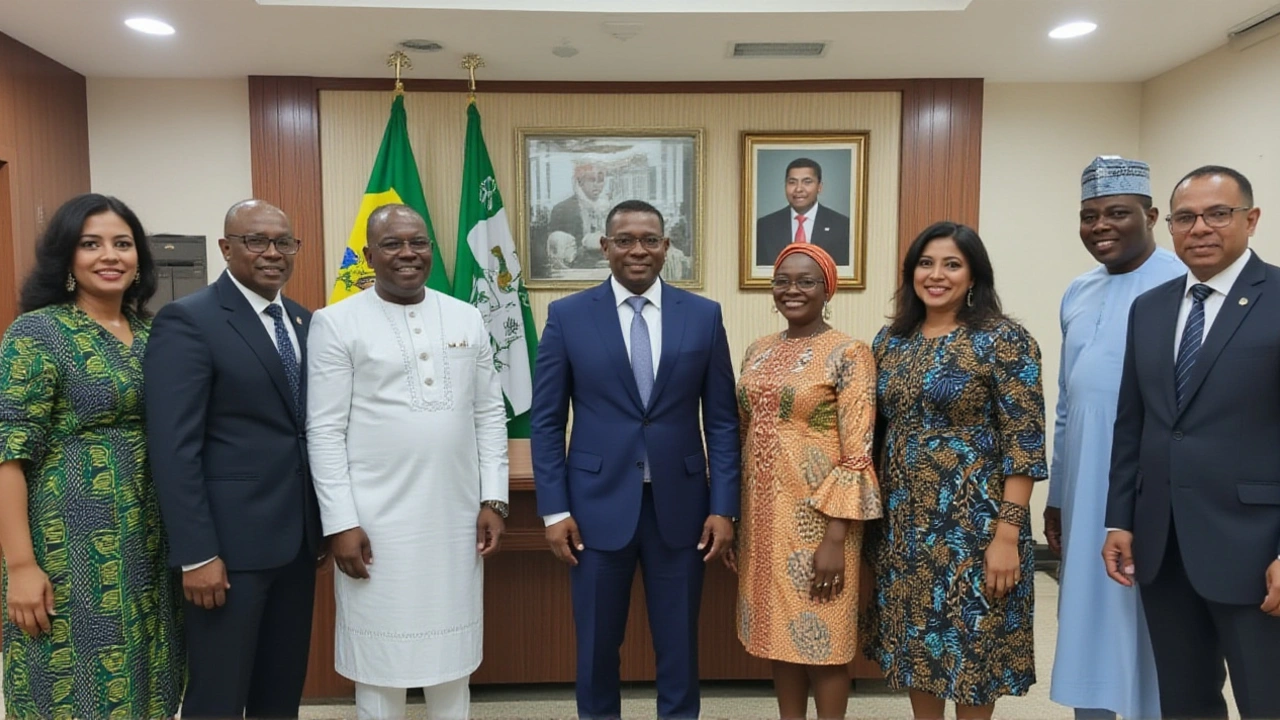
When Chief Geoffrey Uche Nnaji, Minister of Innovation, Science and Technology of Nigeria met with Her Excellency Miriam Morales Palmero, Cuban Ambassador to Nigeria on 5 June 2025 in Abuja, the two governments pledged to sharpen cooperation in science, technology and innovation (STI). The meeting built on a memorandum of understanding signed during a visit by Vice President Kashim Shettima to Havana earlier that year, and it aligns with President Bola Ahmed Tinubu's Renewed Hope Agenda to forge an innovation‑led, self‑reliant economy.
Historical Context of South‑South Cooperation
Nigeria and Cuba have nurtured diplomatic ties since the 1970s, but substantive scientific collaboration remained limited. Over the last decade, Cuba's reputation in biotechnology, public health and technical education has attracted many African nations seeking homegrown solutions. In 2023, Nigeria received scholarships for Nigerian doctors to train in Cuban medical schools – a gesture that set the stage for deeper exchanges.
Experts note that this partnership is part of a broader South‑South strategy, where emerging economies pool resources to reduce dependence on traditional Western donors. The recent high‑level visits by ambassadors from Brazil and Cuba, reported by Senior Special Adviser Dr. Robert Ngwu on 6 June 2025, signal a coordinated push to turn diplomatic goodwill into tangible projects.
Key Agreements from the June 5 Meeting
- Biotechnology and vaccine production: The National Biotechnology Development Agency (NBDA) will work with Cuban partners to scale up local vaccine manufacturing, addressing concerns about potential virus outbreaks.
- Renewable energy pilots: Joint research on solar‑hydrogen hybrids and climate‑smart agricultural technologies.
- STEM education: Twinning programs between Nigerian universities and Cuban institutes, plus exchange fellowships for teachers and students.
- Technology transfer: Establishment of an Innovation and Biotechnology Working Group to coordinate investments and monitor progress.
- Invitation to the International Convention on Environmental Development (ICED 2025Havana, Cuba) scheduled for July 2025.
Dr. Abdullahi Mustapha, Director General of the NBDA, highlighted that "the progress we are making with Cuba in vaccine production is tremendous and time‑critical".
Stakeholder Reactions
Minister Nnaji stressed that "Cuba has shown the world what's possible in biotechnology, public healthcare, and education. Under our Renewed Hope Agenda, Nigeria is charting a similar course—anchored on local manufacturing, youth enterprise, and research‑driven solutions." Meanwhile, Ambassador Palmero described the talks as "a milestone for South‑South solidarity, with science as the bridge linking our peoples."
The Federal Ministry of Innovation, Science and Technology (FMIST) officials said the agreements reflect a whole‑of‑government readiness, noting participation from the National Space Research and Development Agency (NASRDA) and the Raw Materials Research and Development Council (RMRDC).
Potential Impact on Nigeria's Innovation Landscape
If the biotech collaboration delivers even a fraction of the projected vaccine output, Nigeria could reduce its dependence on imported immunizations by an estimated 30 % within three years, according to a study by the Center for Health Policy Research. Renewable energy pilots may shave up to 15 % off national electricity shortages in pilot states, while STEM exchange programs aim to increase enrollment in engineering faculties by 10 % by 2028.
Analysts also warn that successful implementation will hinge on sustained funding and clear governance structures. The newly formed Working Group is tasked with aligning budgets across ministries, a challenge given Nigeria’s fiscal constraints.
Next Steps and Timeline
Both sides agreed on a phased rollout:
- June–August 2025: Finalize the Working Group charter and secure initial funding.
- September 2025: Launch the first vaccine production line at the NBDA facility in Abuja.
- January 2026: Commence renewable energy pilot projects in Kaduna and Enugu states.
- Mid‑2026: Deploy the first cohort of STEM fellows to Cuban universities.
Delegates from Nigeria are slated to attend ICED 2025 in Havana, providing a platform to showcase early results and attract additional partners.
Frequently Asked Questions
How will the partnership affect Nigeria’s vaccine self‑sufficiency?
The collaboration aims to establish at least two local production lines capable of manufacturing COVID‑19‑type vaccines, which could cut imports by roughly 30 % within three years, bolstering the nation’s ability to respond quickly to future outbreaks.
What opportunities exist for Nigerian students in STEM?
Through the twinning program, Nigerian undergraduates will receive scholarships to study engineering and biotechnology at Cuban institutions, while Cuban experts will conduct short‑term courses in Nigerian universities, expanding practical training for thousands of students.
Why is renewable energy a focus of the agreement?
Cuba’s experience with solar‑hydrogen systems offers a low‑cost model that Nigeria hopes to adapt for off‑grid communities, potentially reducing electricity shortages by up to 15 % in pilot regions.
What is the role of the Nigeria–Cuba Innovation and Biotechnology Working Group?
The Working Group will coordinate project timelines, align funding from ministries such as FMIST and NOTAP, and monitor progress across biotech, energy and education initiatives, ensuring that promises translate into measurable outcomes.
When will Nigerian delegates attend the International Convention on Environmental Development?
Delegates are expected to travel to Havana for the July 15‑20, 2025 convention, where they will present early findings from the biotech and renewable energy pilots and network with global experts.
Chance Remien
October 6, 2025 AT 00:50The partnership between Nigeria and Cuba reflects a thoughtful approach to building scientific capacity, and it aligns well with the broader goals of self‑reliance. It demonstrates a clear recognition that collaborative research can accelerate development outcomes. Moreover, the emphasis on biotechnology and renewable energy suggests a strategic diversification of the economy. This initiative could serve as a model for other South‑South partnerships.
Anna Lee
October 21, 2025 AT 01:57Wow, this is super exciting!! I love seeing countries join forces on biotech, renewable energy, and education, it's totally the right direction, and it feels like a win‑win for both sides, even if there are challenges ahead, we'll get there together, definatly!
Can't wait to see the first vaccine line humming in Abuja.
Daniel Craine
November 5, 2025 AT 02:03Looks like more talk than action; these memorandums rarely translate into real production. If they can't fund the pilots, all this hype will just sit on a shelf.
Kristen VanPamel
November 20, 2025 AT 03:10Obviously the only way to succeed is to follow the Cuban model to the letter.
Kasey DellaPenna
December 5, 2025 AT 04:17Great news for our STEM community. The exchange programs will give students real hands‑on experience and boost local innovation.
Gayleen Lowrie
December 20, 2025 AT 05:23The scholarship opportunities sound promising and could really lift up our future scientists. It's encouraging to see such concrete steps toward capacity building.
Wesley Nakamatsu
January 4, 2026 AT 06:30It is evident that this collaboration will elevate Nigeria to a position of preeminence in the Global South. The strategic alignment with Cuban expertise showcases a sophisticated understanding of geopolitics. Such initiatives underscore our nation's commitment to excellence and sovereign development.
Tyler Tucker
January 19, 2026 AT 07:37This is just another political stunt with no real impact.
julia mutambara
February 3, 2026 AT 08:43What a remarkable step forward for the continent!
Seeing Nigeria and Cuba deepen their scientific ties is genuinely uplifting.
Biotech collaboration could dramatically reduce our dependence on imported vaccines, which is a huge win for public health.
Renewable energy pilots promise to bring clean power to communities that have long suffered from blackouts.
These projects also provide invaluable learning experiences for young engineers and scientists.
When students get the chance to study abroad and bring back new knowledge, the ripple effect can transform entire academic departments.
The working group’s role in coordinating funding is crucial; without clear governance, even the best ideas can stall.
Nevertheless, with strong political will, these initiatives can overcome bureaucratic hurdles.
Imagine a future where Nigerian labs produce cutting‑edge therapies that rival any global competitor.
Such achievements would inspire confidence across Africa and attract further investment.
Moreover, the solar‑hydrogen hybrid technology could set a benchmark for off‑grid solutions.
Local communities could finally enjoy reliable electricity for schools, clinics, and businesses.
The partnership also strengthens diplomatic ties, fostering a sense of solidarity within the Global South.
It sends a powerful message that emerging economies can collaborate on equal footing.
Overall, this venture embodies the spirit of innovation, resilience, and shared prosperity.
We should all celebrate this milestone and continue to support its progress.
Nelleke Elston
February 18, 2026 AT 09:50Sure, it sounds great on paper, but let's not forget past collaborations that fizzled out.
I'm skeptical about the funding timelines and whether the pilots will actually launch.
Still, if they pull it off, it could be a game‑changer.
Liz Lessner
March 5, 2026 AT 10:57I think this is a positive move for our country. It could open up many oppurtunities for young researchers.