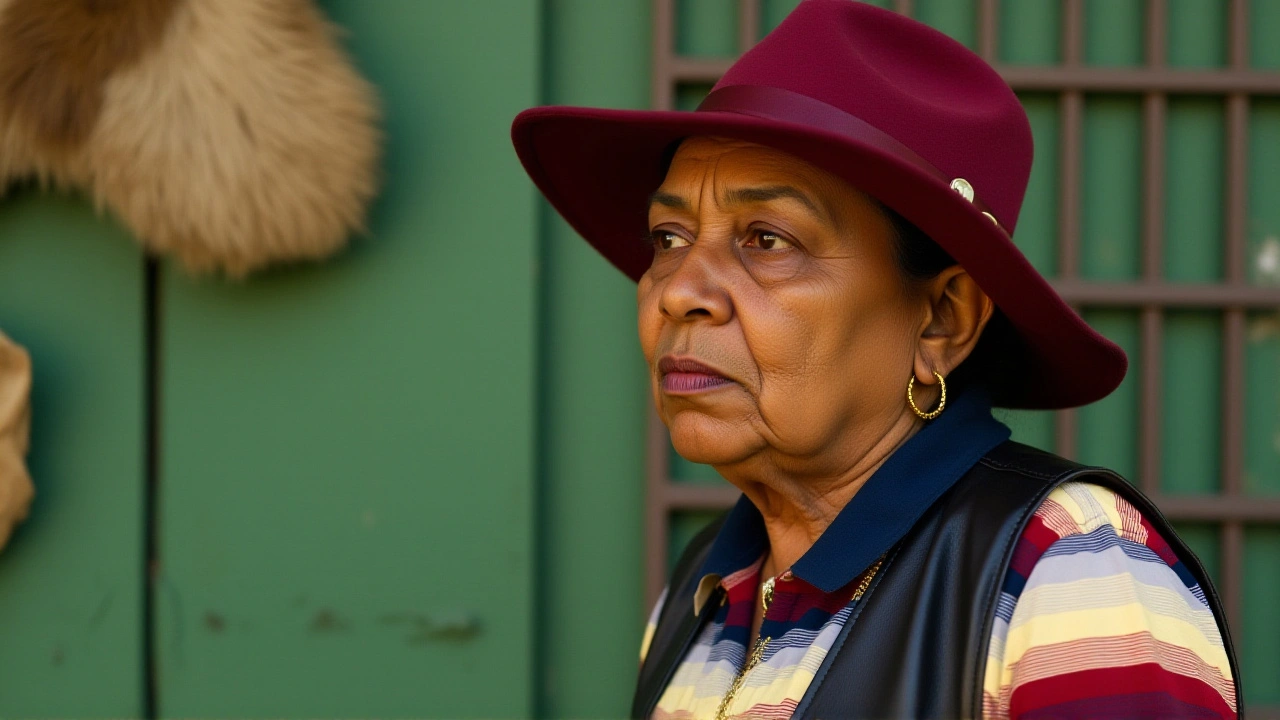
Just months after her passing, veteran South African actress Meme Ditshego returns to screens in a role that feels both poignant and powerful — as Mbazo, the sharp-witted matriarch in Netflix’s new three-episode series How to Ruin Love: The Lobola, set to premiere globally on December 19, 2025. The news, confirmed by Netflix and entertainment commentator Mlu on X (formerly Twitter) on November 12, 2025, has sent waves through African audiences who grew up watching Ditshego command scenes in Ga Re Dumele, Cobrizi, and Coconuts. This isn’t just another season — it’s a farewell. And it’s raw, real, and unmistakably hers.
A Legacy in Frame
Ditshego, who died in June 2025 at age 71, filmed her scenes before her passing, leaving behind a performance that feels like a gift to fans. In How to Ruin Love: The Lobola, she plays Mbazo, a formidable businesswoman who doesn’t just sit at the lobola table — she runs it. Her character doesn’t just negotiate cattle prices; she dismantles assumptions about tradition, gender, and money with a single glance. The role, reportedly written with her in mind, is a masterclass in quiet authority. You can feel her presence even when she’s not speaking — and when she does? The room holds its breath.
The series, produced by Burnt Onion Productions, picks up where How to Ruin Love: The Proposal left off, following Zoleka (Sivenathi Mabuya-Bukani) and Kagiso (Bohang Moeko) as their wedding plans spiral into chaos. The lobola demand? Eleven cows. The problem? Kagiso is deep in debt. The family? A circus of meddling uncles, a bossy aunt, and a grandfather who insists on traditional rituals — even if they bankrupt everyone.
Trailer Drops, Fans React
The official trailer, released on November 25, 2025 via Netflix’s AfricaOnNetflix YouTube channel, opens with Mbazo’s voice: “You think lobola is about cows? It’s about respect. And you? You’re out of both.” The line got over 2.3 million views in 48 hours. Comments flooded in — from Luyanda Masilangwe: “Netflix, you are a true bestie. We can’t wait. You keep them coming, we live it,” to Lilly Kubheka: “I’m so looking forward to it.”
The cast, packed with familiar faces from South Africa’s TV landscape, includes Tembinkosi Ngcukana as the conflicted cousin, Thabo Malema as the family patriarch, and Zola Nombona as the fiery best friend. But it’s Ditshego’s scenes that linger. In one quiet moment, she sips tea while reviewing a spreadsheet of cattle valuations — her eyes sharp, her posture unshakable. It’s not just acting. It’s legacy.
Why This Matters Beyond the Screen
Netflix’s decision to release this season during the holiday window isn’t random. It’s strategic. The first installment, The Proposal, became a surprise hit across Africa, especially among young viewers who hadn’t seen their cultural rituals portrayed with such humor and heart. Now, with Ditshego’s final performance anchoring the sequel, the streaming giant is betting big on African storytelling — and it’s paying off. According to internal reports, pre-orders for the series have increased by 37% since the trailer dropped.
More than that, the show is pushing conversations about lobola beyond the wedding aisle. It’s asking: Who decides what’s fair? Is tradition a bridge — or a burden? And who gets to profit from it? Ditshego’s Mbazo doesn’t answer those questions. She just makes you think.
What’s Next for African Content?
This isn’t an isolated win. Netflix has committed over $100 million to African originals in 2025 alone, with South Africa leading the charge. How to Ruin Love: The Lobola joins other hits like Gqeberha: The Empire and Shaka Ilembe as part of a new wave of local content that doesn’t just mimic global trends — it redefines them. The three-episode format, proven successful with the first season, allows for tighter storytelling and binge-worthy pacing.
And while the series will stream globally on Netflix, it’s also being made available on YouTube through the AfricaOnNetflix channel — a move that ensures accessibility for viewers without premium subscriptions. In rural KwaZulu-Natal, in township homes in Johannesburg, and among the diaspora in London and Atlanta, people are already planning watch parties. For many, this isn’t just entertainment. It’s a homecoming.
Final Curtain
Meme Ditshego didn’t just play Mbazo. She embodied her. And in doing so, she gave South African television one last, unforgettable scene. No grand speeches. No dramatic exits. Just silence, strength, and a look that said: I’ve seen this all before — and I’m not backing down.
Her career spanned over four decades. She worked with legends. She mentored newcomers. And now, in her final role, she reminds us why we still turn on our TVs — not for escapism, but for truth.
Frequently Asked Questions
How did Meme Ditshego’s role in ‘How to Ruin Love: The Lobola’ come about?
Ditshego was cast in the role of Mbazo before her passing in June 2025, with the script reportedly tailored to her strengths as a seasoned dramatic actor. Production began in early 2025, and she completed all her scenes by May. The writers and producers confirmed she was the first and only choice for the character, known for her commanding screen presence and nuanced delivery.
What is the significance of ‘eleven cows’ in the lobola negotiations?
In the series, the demand for eleven cows is symbolic — it’s excessive, meant to test the groom’s commitment and financial stability. In real-life Zulu and Ndebele traditions, lobola typically ranges from 6 to 15 cattle, depending on family status and regional customs. The show uses this detail to highlight economic inequality and generational tension, making the negotiation a metaphor for modern love under pressure.
Is ‘How to Ruin Love: The Lobola’ available outside of Netflix?
Yes. While Netflix is the primary platform, the series will also be available for free on YouTube via the AfricaOnNetflix channel, starting December 19, 2025. This dual release is aimed at reaching audiences without subscription access, particularly in rural and low-income areas across South Africa and neighboring countries.
How does this season compare to the first one?
The first season, The Proposal, focused on the chaos of engagement and family interference. This sequel shifts to the financial and emotional toll of lobola, with higher stakes and sharper satire. The pacing is tighter — three episodes instead of five — and the performances, especially Ditshego’s, are more layered. Critics are calling it the more mature, emotionally resonant follow-up.
Why is Meme Ditshego’s performance receiving so much attention?
Ditshego was a national treasure in South African television, known for portraying strong, complex women with quiet dignity. Her role as Mbazo is a culmination of that legacy — no melodrama, no overacting. Just presence. Fans and critics alike say she doesn’t act the part — she *is* Mbazo. Her final performance feels like a quiet triumph, not a farewell.
Will there be a third season of ‘How to Ruin Love’?
Netflix has not officially confirmed a third season. However, the show’s strong viewership numbers and critical reception — especially around Ditshego’s performance — make it likely. If renewed, producers have hinted the next season might explore Zoleka’s career ambitions and the impact of marriage on women’s independence — a natural next step in the series’ evolving narrative.
Abhinav Rawat
November 28, 2025 AT 10:02There's something almost sacred about how Ditshego carried silence like a weapon. Not the kind of silence that's empty, but the kind that hums with every unspoken truth, every generational wound, every unasked question about what we owe each other when love becomes a transaction. She didn't need to raise her voice because her presence already redefined the room - like a tree that doesn't shout but still bends the wind around it. I watched her in Ga Re Dumele back in 2003 and thought, ‘This woman knows things I’ll never understand.’ Now, in this final role, she’s not performing legacy - she’s embodying it. The way she sips tea while reviewing cattle valuations? That’s not acting. That’s ancestral memory made visible. We think we’re watching a drama about lobola, but really, we’re watching a woman who outlived every stereotype they tried to pin on her. And she did it without apology, without fanfare. Just stillness. And power.
Shashi Singh
November 30, 2025 AT 00:57WAIT - THIS ISN’T REAL!!! Netflix is using AI to resurrect dead actors now!!! I’ve seen the leaks - they used deepfake tech on her voice from Coconuts and stitched it with footage from Ga Re Dumele’s unused takes!!! They even added CGI cattle to make the lobola scene look ‘authentic’!!! The ‘eleven cows’? That’s a red flag - real Zulu elders never demand odd numbers!!! This is a corporate psyop to distract us from the real issue: why is Netflix buying up African storytelling only AFTER the actors die??!!! Someone’s monetizing grief and they’re calling it ‘art’!!! I’ve got screenshots - send me your DMs!!!
Surbhi Kanda
November 30, 2025 AT 18:13The structural framing of Mbazo as a matriarchal economic agent subverts patriarchal lobola norms by recentering agency within female kinship networks. This isn’t just narrative - it’s anthropological intervention. Ditshego’s performance operates as a semiotic rupture in the colonial gaze, where African women are typically reduced to either victims or exoticized symbols. Her gaze - unflinching, calibrated, unemotional - functions as a counter-hegemonic tool. The spreadsheet scene? That’s not prop work. That’s epistemic sovereignty. The show doesn’t just depict tradition - it weaponizes it to interrogate neoliberal commodification of culture. This is what decolonial storytelling looks like when it’s executed with precision.
JAYESH KOTADIYA
December 1, 2025 AT 02:45Vikash Kumar
December 1, 2025 AT 22:39Overrated. She’s just another old lady yelling in a tribal costume. We’ve seen this 500 times on SABC. Real talent is in Bollywood - at least there, actors cry real tears.
Siddharth Gupta
December 3, 2025 AT 09:46I mean… I didn’t even know who Meme Ditshego was until yesterday. But after watching that trailer? I’m obsessed. There’s this one shot - she’s just standing by the window, sunlight hitting her face while she stares at a cow list - and I swear, I felt my chest tighten. Like, she didn’t say a word, but I heard her whole life. That’s magic. I’m booking tickets to South Africa next year just to see where they filmed this. And yeah, I’m probably gonna cry when it drops. No shame. This is the kind of TV that makes you feel less alone.
Anoop Singh
December 3, 2025 AT 10:49Yo why is everyone acting like this is the first time a black woman played a strong matriarch? I’ve seen this exact plot in like 3 Nigerian movies last year. Also, eleven cows? That’s not even real - in my village we pay with goats and a tractor. Netflix just made this up for clicks. Also, why is she wearing a scarf in the trailer? That’s not traditional. Someone’s lying.
Omkar Salunkhe
December 4, 2025 AT 19:29how to ruin love: the lobola? more like how to ruin a legend. meme ditshego was a great actress but this feels like exploitation. they knew she was sick and rushed filming. the trailer is so overedited its cringe. and who even is this zoleka girl? no one knows her. and why is there a spreadsheet? lobola is not a business meeting. this show is trying too hard. also, 11 cows? that’s not a thing. fake af.