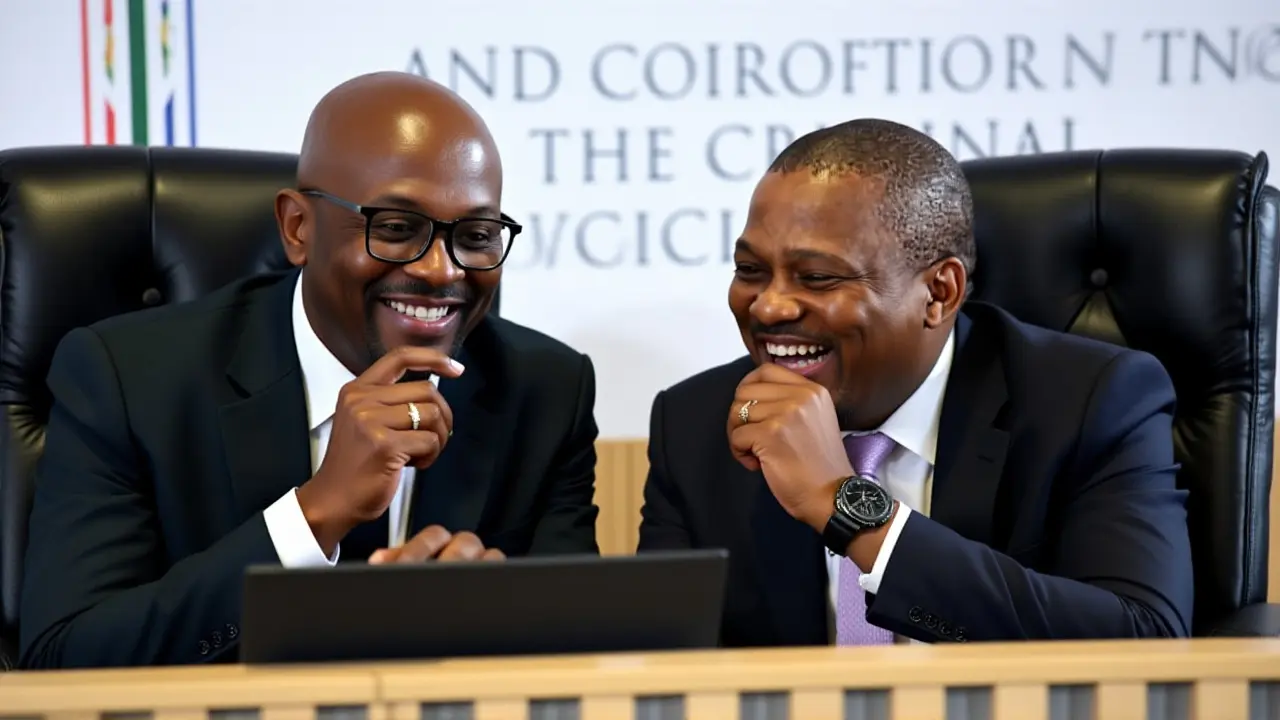
President Cyril Ramaphosa has received a bombshell report that promises to shake up South Africa’s criminal justice system. On December 17, 2025, the Madlanga Commission of Inquiry handed over its interim findings, identifying serious wrongdoing among high-ranking police officers. Here’s the thing: ten specific individuals have been flagged with prima facie evidence pointing directly to misconduct. It’s not just gossip; this is official groundwork for potential prosecutions.
The investigation spans both national and municipal levels. The Commission, led by retired Constitutional Court Justice Mbuyiseli Madlanga, uncovered links between the South African Police Service (SAPS) and the Ekurhuleni Metropolitan Municipality. This isn’t an isolated incident. We’re seeing a pattern of interference that challenges the very backbone of local law enforcement.
The List of Accused and Legal Implications
When you look at the names released, it reads like a who’s who of operational command. Five SAPS officials made the list: Major General Lesetja Senona, Major General Richard Shibiri, Brigadier Mbangwa Nkhwashu, Brigadier Rachel Matjeng, and Sergeant Fannie Nkosi. Their ranks suggest deep institutional knowledge. Meanwhile, five employees connected to the Ekurhuleni Metro were also targeted. That includes suspended Chief of Police Commissioner Julius Mkhwanazi and former City Manager Dr Imogen Mashazi.
But wait – "prima facie" doesn’t mean guilty yet. Interestingly enough, the legal bar here is that there is sufficient initial evidence to warrant further probing. Clause 10.4 of the Commission’s terms gives it power to refer matters for urgent prosecution decisions. Essentially, the Commission told agencies like IPID: “Look closer, and fast.” Without this referral, these cases might have stalled in bureaucracy forever.
Presidential Action and Special Task Teams
President Ramaphosa didn’t just read the report and sit back. He demanded speed. In his directive, he pointed fingers squarely at the Ministry of Police. Professor Firoz Cachalia, the Minister of Police, was instructed to work alongside General Fannie Masemola, the national commissioner of SAPS. Their job? Build a special task team that reports directly to General Masemola.
This move is critical. Why? Because standard investigations can take years. By creating a dedicated unit, the administration hopes to bypass the usual red tape. The goal is restoring public trust, which feels incredibly fragile right now. If citizens believe their own police force is compromised, nobody wins. The expectation is immediate operational changes pending the outcome of these fresh probes.
Ongoing Hearings and Public Transparency
Even after the interim report dropped in December 2025, the inquiry didn’t stop. By March 24, 2026, the Commission was still deep in hearings. Day 84 saw testimony from ex-EMPD Chief Revo Spies. It highlights how long these processes drag on. While the interim report gave us names, the full picture requires more witness statements.
Some of the accused haven’t even had a chance to respond fully to the allegations yet. Except for EMPD Chief Commissioner Julius Mkhwanazi, others listed hadn’t returned before the panel to give their side of the story. The Commission noted this gap clearly. It means the process remains fluid. New evidence could shift the narrative before final conclusions are drawn.
Understanding the Broader Impact
Why does this matter to ordinary people in Johannesburg or Pretoria? When corruption infiltrates the justice system, criminals walk free while victims suffer. Lieutenant-General Nhlanhla Mkhwanazi originally exposed this syndicate network. His whistleblowing triggered the entire chain of events starting July 13, 2025. Now, the Independent Police Investigative Directorate (IPID) is expected to step in where delays occurred.
The ripple effects extend beyond discipline. If officials are removed, operational capacity might dip temporarily during the transition. However, cleaning house is necessary for long-term stability. Experts argue that swift action here could serve as a blueprint for future anti-corruption drives across other state sectors.
Frequently Asked Questions
What does 'prima facie' evidence mean in this context?
In simple terms, it means there is enough evidence to warrant a trial or further investigation, but it is not a final verdict of guilt. The Commission found indications of wrongdoing serious enough to trigger immediate action by law enforcement agencies like SAPS and IPID without waiting for a court conviction first.
Are the accused officials suspended immediately?
Not necessarily all at once. The Commission noted that except for Commissioner Julius Mkhwanazi, who is already suspended, it hasn’t heard responses from all listed persons yet. Employment status recommendations depend on the urgency of the allegation and pending outcomes from the special task team appointed by General Masemola.
How does IPID fit into these investigations?
The Independent Police Investigative Directorate acts as an oversight body specifically for police misconduct. The Madlanga Commission referred certain matters to IPID, asking for explanations on any previous investigation delays. IPID ensures independent scrutiny rather than internal policing handling the complaints.
When will the final report be released?
A final timeline wasn’t explicitly set beyond the interim deadline of December 2025. Hearings continued into March 2026, suggesting more evidence gathering is needed. The Commission plans to convene separate inquiries as required, meaning the public may see phases of reporting rather than one single final document.
Who originally triggered this commission?
Lieutenant-General Nhlanhla Mkhwanazi sparked the inquiry by alleging a sophisticated criminal syndicate infiltrated the justice system. President Ramaphosa established the commission in July 2025 based on those whistleblower claims. His testimony and subsequent leaks were the catalyst for bringing Justice Madlanga onto the case.
Cheri Gray
March 26, 2026 AT 04:16This is such a big deal right now Its really sad seeing the big men fall like this in the police force. Hope justice works fast for everyone involved in these probes finally. South Africa needs help now and we cant wait anymore for the report to finish. People want answers on who did what and when exactly. We shud see results soon after all this commotion.
Danny Johnson
March 26, 2026 AT 09:25Totally agree with what you said there about needing answers quickly! It is tough seeing our leaders struggle sometimes with these scandals. We should all stay positive though while waiting for the outcome to land!
Christine Dick
March 27, 2026 AT 02:42This situation is utterly disgraceful!!! The standards of morality have been completely abandoned!!! We must hold every single individual accountable for their actions!!! Justice cannot be sold to the highest bidder in this country!!! It is absolutely essential that the law takes immediate action against these officers!!! Corruption eats away at the foundation of society itself!!! So many innocent people suffer because of this negligence. We simply cannot allow this behavior to continue unchecked!!! The commission has done its job and revealed the truth!!! Now others must act swiftly upon these findings. Bureaucracy often hides behind red tape too long. Public trust is shattered by such revelations daily. We expect nothing less than total transparency moving forward. Every rank and file officer deserves dignity while leadership fails. Let us hope this sets a precedent for future inquiries nationwide. Truly a momentous occasion for legal reform!!
Jullien Marie Plantinos
March 28, 2026 AT 17:39These guys need to go down hard!!! They ruined our reputation completely!!!
Jason Davis
March 29, 2026 AT 03:32That is indeed a strong take buddee! Usually when high ranking folks get flagged like this the whole chain starts shaking badly. The process takes time but cleaning house helps the vibe long term for sure. Gotta respect the effort put into diggin up these filss officially.
Crystal Zárifa
March 29, 2026 AT 19:01Oh great, another report promising to fix things tomorrow.
Serena May
March 31, 2026 AT 13:38Exactly!!! 😡🤬 They never actually follow through on promises ever. 🛑❌
Cheryl Jonah
April 2, 2026 AT 06:21Nobody trusts the system anymore honestly speaking. Behind every scandal is always someone trying to protect the bigger fish swimming in deep water secretly. This report feels like just noise to calm people down before the real dirt comes out later maybe.
James Otundo
April 2, 2026 AT 23:54Your perspective lacks intellectual rigour frankly speaking. The common populace rarely grasps the nuance required to understand institutional decay properly enough. You project your insecurities onto this complex bureaucratic machinery without sufficient data to back it up fully. Stop complaining and look at the facts presented by the commission instead objectively.
Sarah Day
April 4, 2026 AT 08:28Yeah we just want things to get better for everyone in the end hopefully.
ryan pereyra
April 5, 2026 AT 05:13Operational parity is being compromised significantly here across multiple vectors of enforcement synergy clearly. We require a paradigm shift in accountability metrics immediately moving forward.
Anthony Watkins
April 6, 2026 AT 01:51Lock them up already!!! 👊🚔💨
Danny Johnson
April 6, 2026 AT 12:33I hear you on needing changes made quickly for the safety of us all! Everyone wants safety back in the streets soon regardless of politics. Lets keep supporting the process until it wraps up nicely!