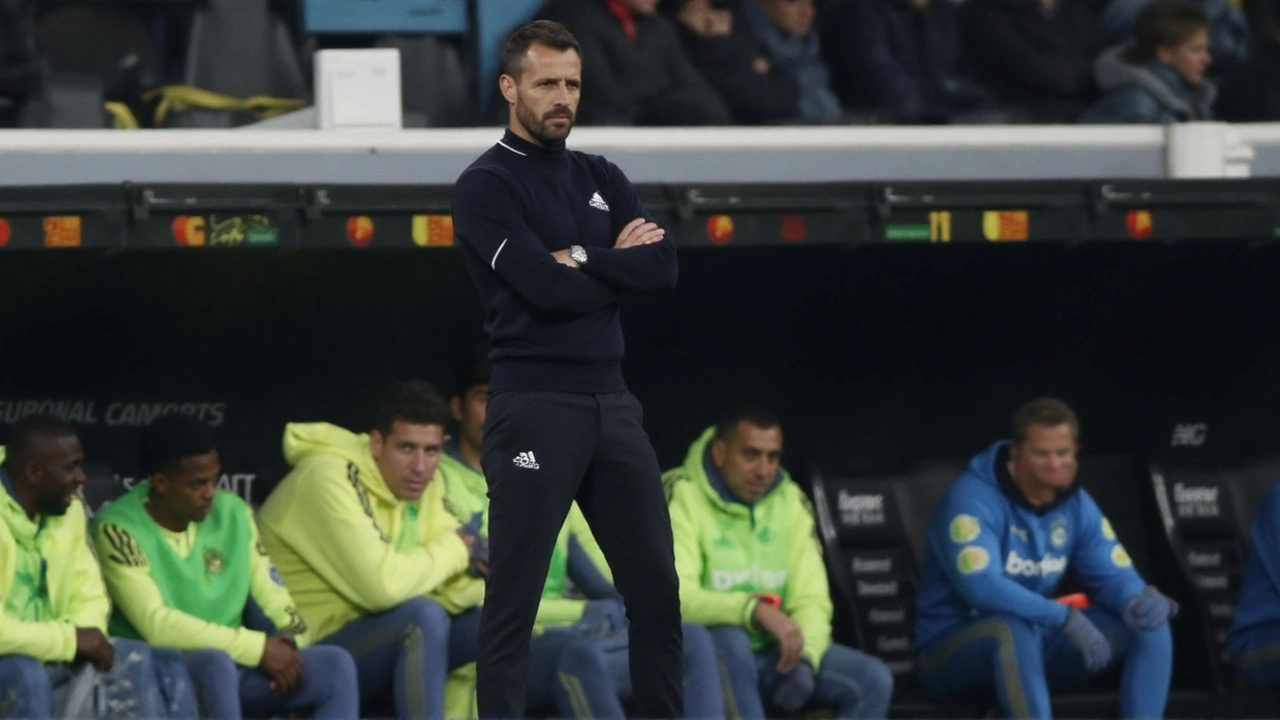
Roma move for Farioli as Ajax fallout ripples across Serie A
The managerial market in Italy just got interesting. Roma have placed Francesco Farioli near the top of their shortlist after his sudden departure from Ajax, a split driven less by results and more by a clash of visions behind the scenes. The knock-on effect is already being felt across Serie A, with AC Milan keeping a close eye on Vincenzo Italiano’s talks at Bologna.
Sources in the Netherlands say Farioli’s exit from Amsterdam followed sharp disagreements over how to build the squad and how to use club resources. Sporting director Alex Kroes pushed for a more aggressive playing style and made clear that only part of the club’s Champions League prize money would be reinvested in the team. That stance didn’t align with Farioli’s plan for a deeper rebuild, and tensions around training facilities only widened the gap.
Despite the abrupt ending, Farioli hasn’t rushed into his next move. He has turned down an offer from Saudi Arabia and isn’t in active talks elsewhere, according to people close to the coach. That hasn’t stopped major clubs from circling. Chelsea and Tottenham have asked about his availability and ideas, but both London sides are still evaluating their current benches and have not pulled any triggers.
Roma’s interest is clear, but there’s a twist. Club executives hadn’t expected Farioli to become available this summer and have also discussed bringing in a more experienced profile. Even so, if Roma push decisively, they would be well-placed. Farioli fits the club’s long-term thinking: a modern technician comfortable developing younger players, willing to coach an evolving squad, and open to a multi-year project rather than a quick fix.
What would he change in Rome? Expect a clear identity built from the back, a structure that balances possession with pressing triggers, and a demand for technically clean profiles in defense and midfield. That kind of shift needs time, patience, and a recruitment plan that lines up with the coach’s requests—precisely the areas where the Ajax relationship fell apart.
Another factor: the market for managers is tighter than it looks. Top European clubs are weighing cost, contract length, and the need for stability after a string of mid-season changes last year. In that context, a free coach with a distinct blueprint is valuable. That’s why Roma are doing homework now, even if they also keep one eye on more battle-tested names.
Italiano’s Bologna talks and Milan’s silent watch
Across the country, Milan are watching Bologna for any sign of movement. Vincenzo Italiano is in negotiations for a short extension, and the numbers are modest by top-club standards—about €2.5 million per year. The term is expected to be short, giving both sides flexibility. But the real sticking point isn’t salary. Italiano wants clarity on the squad he’ll be coaching in August.
Several Bologna players have strong market interest and at least one or two sales are likely. For Italiano, the question is whether those exits come with credible replacements. He wants guarantees on positions, not names: a starting-quality center-back if one leaves, a ball-progressing midfielder if another goes, a winger with pace if the attack is trimmed. These are baseline asks for a coach who prefers aggressive pressing, quick switches, and a front-foot mentality.
Milan’s stance is patient. They aren’t pushing to unsettle Bologna, but they are preparing for possible outcomes if talks collapse late. Italiano’s football fits what many big clubs want right now: energy, verticality, and a readiness to develop talent. If a door opens, Milan want to be ready. For now, they’re lurking rather than bidding.
Napoli are also hovering in the background. Their interest in Italiano depends on Antonio Conte’s future in Naples. Should that situation change, Napoli would move fast. That possibility adds quiet pressure on Bologna to get the renewal done and to provide the assurances their manager is seeking.
From Bologna’s side, the logic is simple: they want continuity without blowing up the budget. They also know the squad’s value has never been higher, which is exactly when tough decisions on sales are made. The compromise route—a couple of high-value exits, targeted reinvestment, and a coach-friendly timeline—would satisfy most parties, but executing that plan is the hard part.
All of this feeds back into Roma’s thinking about Farioli. If Italiano stays put, and if Napoli sit tight, the competition for Farioli becomes more Premier League-centric, with Chelsea and Tottenham keeping tabs from a distance. That would leave Roma a clean path if they act before England’s benches start moving again.
What are the key dynamics to watch over the next few weeks?
- Roma’s internal debate: a young tactician with runway versus a veteran with a track record of instant results.
- Farioli’s demands: alignment on recruitment, a voice in facility upgrades, and space to shape the squad over multiple windows.
- Bologna’s sales: which starters are sacrificed, how quickly replacements arrive, and how that impacts Italiano’s mood.
- Milan’s timing: staying patient while keeping options open if a late opening appears.
- Napoli’s trigger: any movement around Conte that would spark a chain reaction.
Farioli’s broader appeal is easy to understand. He’s young, clear in his ideas, and not afraid to challenge the status quo inside a club. That last piece is a double-edged sword: it makes him attractive to teams that want a reset, but it also requires a front office that welcomes dissent and builds with him rather than above him.
On the pitch, expect a coach who invests in structure during the week to unlock freedom on the weekend. His teams tend to press in waves rather than all-out chaos, and he values defenders who can take the first pass under pressure. For Roma, that means the recruitment list would tilt toward center-backs comfortable in space, a metronome in midfield, and wide players who work without the ball.
Italiano, by contrast, drives intensity. His sides are direct when the opportunity presents itself, with wide overloads and quick combinations. He prefers clarity over complexity: roles well-defined, distances tight, and a commitment to regain the ball immediately after losing it. That makes his teams watchable and hard to play against, but it also demands depth—especially across the front line and at full-back.
For clubs balancing budgets and ambition, both managers offer something valuable. Farioli sells the promise of a project where the ceiling rises each window. Italiano promises a defined identity that can hit the ground running if the squad fits. Neither is a plug-and-play solution without backing, and that’s where this summer’s decisions will be made: in boardrooms, not just on training pitches.
One more wrinkle: the Premier League factor. Chelsea and Tottenham are not in a hurry, but their interest changes the temperature of the room. If either club moves, it will compress timelines for everyone else. That is why Roma’s window may be shorter than it looks, and why Milan are drafting contingency plans even while they play the waiting game with Bologna.
For now, the board is set. Farioli is free and listening. Roma are weighing risk and reward. Italiano is negotiating for security more than money. Bologna are trying to keep the project intact without overcommitting. Milan and Napoli are tracking the angles. One decision will likely trigger the rest.
Patrick Van den Berghe
August 24, 2025 AT 17:33Farioli leaving Ajax is a wake‑up call for Roma they should move fast
Josephine Gardiner
August 29, 2025 AT 03:09It is evident that the divergence of strategic visions between Mr. Farioli and Ajax precipitated his departure. Consequently, clubs such as Roma must evaluate not only the tactical acumen of the coach but also his compatibility with institutional objectives.
Jordan Fields
September 2, 2025 AT 15:31The contractual freedom of Farioli presents a rare opportunity for clubs seeking a coherent footballing philosophy; however, fiscal prudence remains paramount.
Divyaa Patel
September 7, 2025 AT 03:54In the grand theatre of football, a maestro departs only to discover a new stage where his symphony may yet resonate. Farioli’s exit from Amsterdam is not merely a professional shift; it is a seismic echo that reverberates through the marble corridors of Roma’s aspirations. The clash of visions-a clash of ideologies-mirrors the eternal conflict between order and chaos that defines any great narrative. As the eternal pendulum swings, the question is not whether Rome will embrace his doctrine, but how they will rewrite their own story in its wake.
Larry Keaton
September 11, 2025 AT 16:17Yo guys, Roma gotta act fast or they’ll miss out on Farioli’s vision. He’s all about building from the back and pushing young talent, so the club should lock him down now. It’s a win‑win if they give him the tools to shape the squad. Don’t overthink it, just make the move and trust the process.
Liliana Carranza
September 16, 2025 AT 04:39Let’s rally behind this potential partnership! A fresh, dynamic approach can ignite the A.S. Roma fanbase, turning every match into a celebration of progressive football.
Jeff Byrd
September 20, 2025 AT 17:02Sure, because hiring a coach who just left a top Dutch side is exactly the “no‑risk” strategy every club dreams of. I guess Roma loves living on the edge.
Joel Watson
September 25, 2025 AT 05:25From an analytical perspective, the appointment of a tactician such as Farioli constitutes a paradigmatic shift in the club’s ontological framework, necessitating a reconfiguration of both scouting parameters and institutional philosophy.
Chirag P
September 29, 2025 AT 17:47It would be prudent for Roma to conduct a comprehensive assessment of Farioli’s methodological preferences, ensuring alignment with the club’s long‑term developmental blueprint.
RUBEN INGA NUÑEZ
October 4, 2025 AT 06:10All stakeholders should engage in transparent dialogue with Farioli, outlining clear recruitment targets and facility upgrades to avoid future discord.
Michelle Warren
October 8, 2025 AT 18:33Honestly this whole saga feels like a nevr ending soap opera.
Christopher Boles
October 13, 2025 AT 06:55Support the decision‑making process and keep fans informed; a well‑communicated plan will foster optimism throughout the community.
Crystal Novotny
October 17, 2025 AT 19:18The market for coaches is often portrayed as a simple supply chain. In reality it is a complex web of egos and power. Farioli’s departure from Ajax is not merely a managerial change. It is a symptom of deeper institutional misalignments. Roma’s interest signals a desire to break from conventional hiring. Most clubs chase proven winners while neglecting visionary thinkers. This bias reinforces a cycle of short termism. A club that embraces a coherent philosophy can outlast fleeting successes. Yet many executives fear the unknown. They prefer veterans with trophy cabinets. Farioli offers a blueprint that blends structure with creativity. Such a blend can cultivate a sustainable identity. If Roma grants him autonomy the payoff could be substantial. Conversely a half‑hearted commitment will doom the project. The ultimate lesson is that football, like any art, thrives on risk.
Reagan Traphagen
October 22, 2025 AT 07:41Behind the scenes there’s probably a hidden agenda by Ajax shareholders who wanted to install a more pliable figure; the whole Farioli saga might be a smoke‑screen for deeper financial maneuvering.
mark sweeney
October 26, 2025 AT 19:03People rave about Farioli but honestly I think Roma is better off looking elsewhere; they don’t need another “young genius” they need a seasoned leader who can deliver immediate results.
randy mcgrath
October 31, 2025 AT 07:26While speculation can be tempting, the true measure will be how Farioli translates his ideas onto the field; performance will silence the rumors.