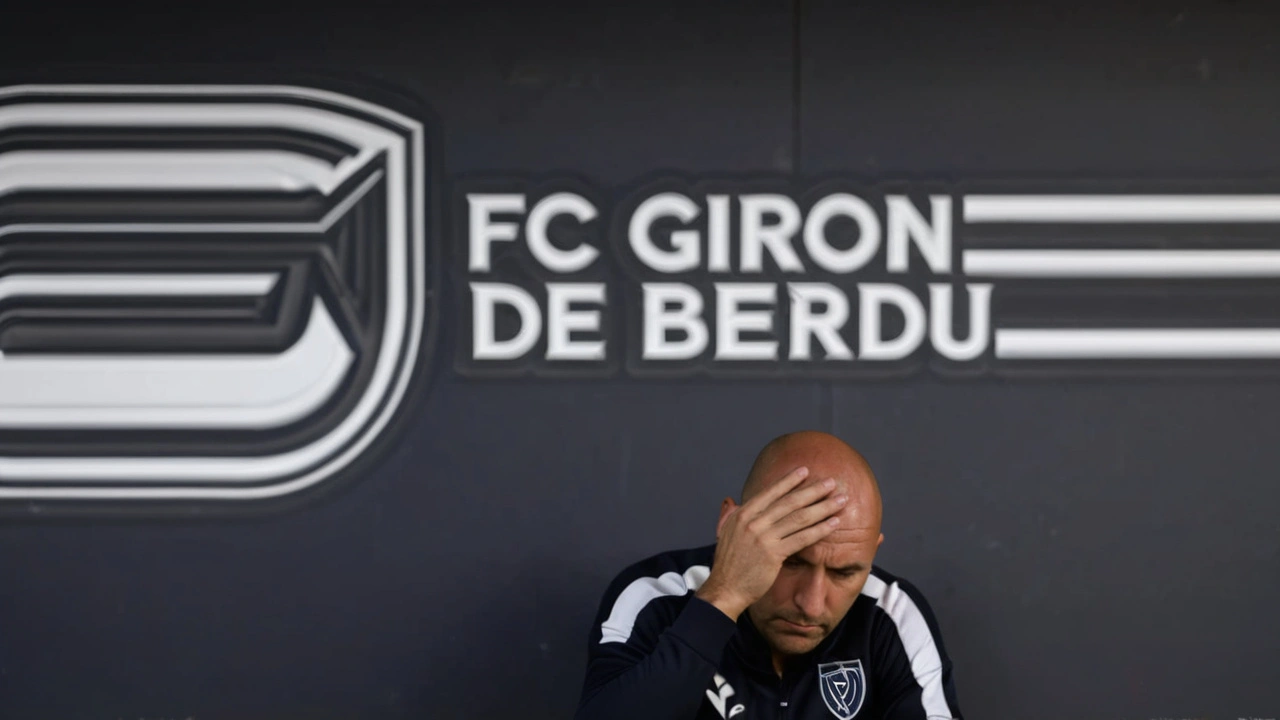
Bordeaux's Financial Downfall and Relegation
The historic football club, Bordeaux, has succumbed to bankruptcy and sees itself relegated to the third tier of French football, a staggering blow to both the club's legacy and French football. Known officially as FC Girondins de Bordeaux, the club’s demise came after takeover talks with Liverpool FC's owner, Fenway Sports Group (FSG), collapsed. This sudden change in fortune leaves fans, players, and officials reeling.
From Glory Days to Bankruptcy
Founded in 1920, Bordeaux has been a significant player in French football for over a century. The club boasts six top-flight titles, the most recent being in 2009, and has been a nursery for footballing talent, producing famous players like Bixente Lizarazu, Jules Kounde, and the legendary Zinedine Zidane. Such a rich history and tradition make their descent into financial turmoil and relegation even more poignant.
The National Directorate of Management Control (DNCG) demoted Bordeaux from Ligue 2 due to severe financial concerns. Having just finished mid-table under the guidance of coach Albert Riera, a former player for both Bordeaux and Liverpool, the club was already precariously positioned. Riera’s tenure was marked by hopes of stabilization, but financial woes seem to have crippled those ambitions.
Failed Takeover Talks
The hopes of stabilizing the club suffered a fatal blow when Fenway Sports Group withdrew from takeover discussions. FSG, owners of Liverpool FC, were seen as potential saviors who could bring financial stability and a new vision to Bordeaux. However, negotiations did not come to fruition, sealing the fate of the club.
Such withdrawals are not uncommon in the unpredictable football industry where financial negotiations are intricate and often affected by myriad factors. Whether it was due to financing disagreements, future profitability assessments, or other strategic reasons, FSG’s decision to back out has left Bordeaux high and dry.
The Impact on Local and National Football
Bordeaux’s relegation and bankruptcy have repercussions far beyond the club itself. French football is gearing up for the Olympics, which will be hosted in Paris. This development casts a shadow over the preparations, marking a critical moment of instability within the country's sporting landscape.
The closure of Bordeaux’s famed academy, operational since 1937, is a particularly disheartening aspect of this saga. The academy was more than just a training ground; it was an institution that nurtured young talents and shaped future stars. Its closure denotes the loss of an essential resource for nurturing football talent in the region.
President Gerard Lopez's Statement
Club president Gerard Lopez, who also owns Portuguese club Boavista and has a background in Formula One, has been an outspoken figure throughout the crisis. He had initially tried to put a positive spin on the demotion, suggesting that it would serve as an opportunity for the club to rebuild and eventually return to its former glory.
Lopez’s strategy did have its merits. The idea was to stabilize finances, restructure, and come back stronger. However, the spiraling financial challenges appear to have outpaced efforts to control the situation, leading to the current scenario.
What's Next for Bordeaux?
The road ahead for Bordeaux is uncertain and fraught with challenges. The club, staff, and fans are entering uncharted territory. For a club that has tasted the pinnacle of French football, descending to the third tier is nothing short of a nightmare.
Financial restructuring will be the immediate focus. Potential new investors, local government support, and perhaps the goodwill of the extended football community could play a role in reviving the club. However, whether these elements will come together in time is a looming question.
Conclusion
Bordeaux’s story serves as a significant chapter in the annals of French football, one that exemplifies the volatile nature of the sport where financial stability is as crucial as on-field performance. As France gears up for the 2024 Paris Olympics, the plight of Bordeaux is a stark reminder of the challenges that lie beyond the glitz and glamour of top-tier football.
While the club may be down, it has a rich history of resilience. Only time will tell if Bordeaux can rise from the ashes and reclaim its place in French football's upper echelons.
Josephine Gardiner
July 26, 2024 AT 20:54It is evident that the unfortunate descent of Bordeaux into financial insolvency and subsequent relegation constitutes a profound disturbance within the French footballing hierarchy; the club's storied legacy, which spans over a century, now appears imperiled by fiscal mismanagement and the withdrawal of prospective investors.
Jordan Fields
July 26, 2024 AT 20:55The article outlines the bankruptcy facts concisely; the DNCG's sanction is clear; FSG's pull‑out is a key factor.
Divyaa Patel
July 26, 2024 AT 20:55What a tragic opera! Bordeaux, once the crown jewel of Aquitaine, now lies shattered on the cracked marble of financial ruin; the echoes of Zidane's brilliance fade beneath the mournful cries of supporters whose hearts bleed crimson and white, yet feel the sting of betrayal from distant boardrooms that scramble for profit over passion.
Larry Keaton
July 26, 2024 AT 20:56Yo, I feel ya on that drama vibe – it’s like watching a bad season of a reality show where the producers just bail out and leave the cast stranded. The whole FSG thing was supposed to be a lifeline, now it’s just a broken promise, and the fans are the ones paying the price. It’s wild how fast things can go from hype to heartbreak.
Liliana Carranza
July 26, 2024 AT 20:57Hey, keep your head up, fam! Even when the club hits rock bottom, the community spirit can spark a comeback. Remember the legends who rose from this very city – they proved resilience runs in our veins. Let’s rally together, stay positive, and maybe the next chapter will shine brighter than ever.
Jeff Byrd
July 26, 2024 AT 20:58Well, looks like Bordeaux finally decided to take a vacation to the third tier – must be nice to finally get some “peace and quiet” after all those champagne celebrations.
Joel Watson
July 26, 2024 AT 20:59One might argue that the lamentations surrounding this decline are merely a symptom of an over‑glorified past, yet the current predicament underscores a deeper systemic failure, not merely a fleeting misstep.
Chirag P
July 26, 2024 AT 21:00In my view, the collapse highlights the necessity for stricter financial oversight within French football; clubs must prioritize sustainable budgeting over chasing short‑term glory.
RUBEN INGA NUÑEZ
July 26, 2024 AT 21:00Indeed, rigorous auditing is vital. The DNCG’s intervention, while harsh, serves as a reminder that fiscal responsibility cannot be ignored if clubs wish to maintain their competitive status.
Michelle Warren
July 26, 2024 AT 21:01this is just another sad story in football.
Christopher Boles
July 26, 2024 AT 21:02Look on the bright side – tough times can bring new opportunities. Fans can help rebuild the club from the ground up with fresh ideas and community support.
Crystal Novotny
July 26, 2024 AT 21:03The narrative presented here, while thorough, perhaps overshadows the inevitable conclusion that football clubs, regardless of heritage, are vulnerable to the caprices of modern capitalism; this event serves as a cautionary tale, not merely for Bordeaux but for every institution that places complacency above prudence. Yet, one might contend that the emphasis on financial mismanagement neglects the cultural impact of such a fall, for the supporters' identity is intertwined with the club's fortunes. Moreover, the abrupt withdrawal of FSG could be interpreted not solely as a lack of faith but as a strategic retreat amidst broader market uncertainties. Still, the closure of the academy, a cradle of talent for decades, signals a loss that transcends the immediate fiscal concerns. In a broader context, French football's preparation for the upcoming Olympics may nevertheless proceed, but the shadow of Bordeaux's crisis looms as a reminder of systemic fragility. Some may argue that the club's historic achievements warrant a more generous window for recovery; however, fiscal responsibility remains paramount. Ultimately, each stakeholder-be it investors, governing bodies, or fans-must reconcile passion with pragmatism. The lesson, distilled, is that heritage alone cannot shield an organization from financial ruin. Thus, the discourse should shift towards sustainable models that preserve both legacy and solvency. In conclusion, Bordeaux's plight underscores the delicate balance between ambition and accountability, a balance that all clubs must navigate in an increasingly commercialized sport.